HVAC Tools List (With Pictures): Essential Gear and Software for Service Techs
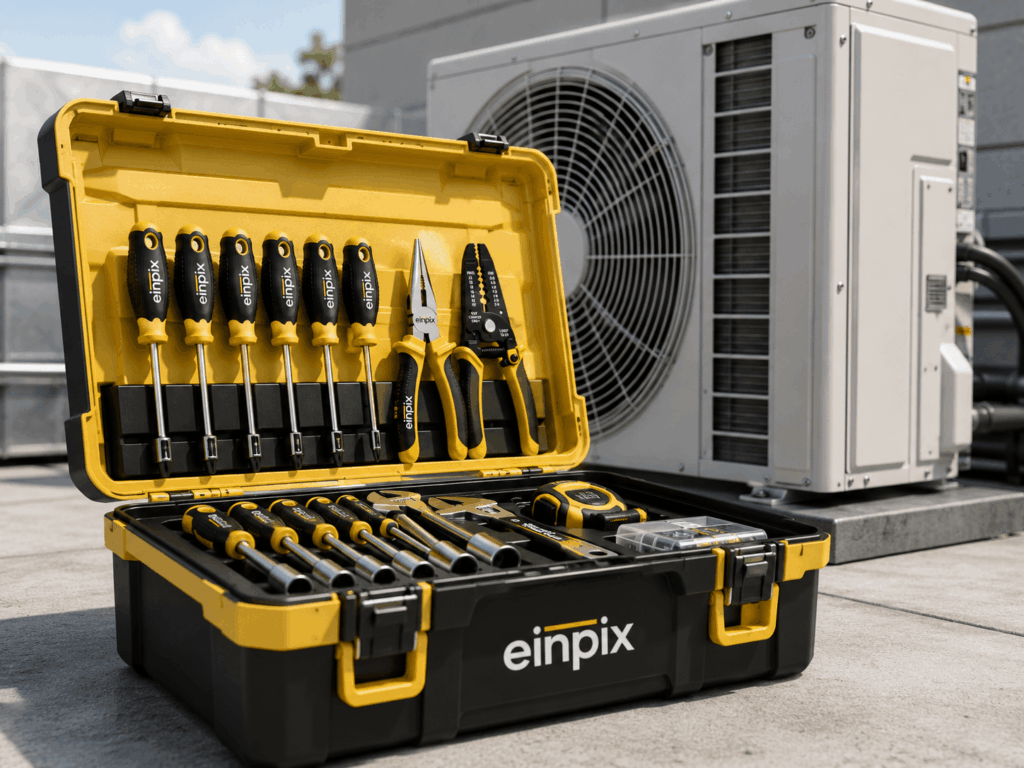
HVAC technicians rely on different tools depending on whether they are installing systems, diagnosing faults, or carrying out routine maintenance. Some tools are used on almost every job, while others only become necessary once work expands into refrigerant handling, advanced diagnostics, or full system installation. Building a complete toolkit usually happens in stages, starting with daily hand tools before moving into more specialist equipment.
Which HVAC tools should beginners buy first?
A new HVAC technician does not need every advanced tool straight away. Most early work can be handled with a strong hand-tool foundation and a few diagnostic essentials, especially when larger refrigerant tools are already available through an employer or shared workshop stock.
Start with hand tools before specialist equipment
A beginner kit should first cover fasteners, wiring, and basic mechanical adjustments. Screwdrivers, pliers, wire tools, and a reliable wrench solve most day-to-day tasks, especially when opening units, tightening terminals, or preparing wiring during service calls.
Add a few diagnostic tools once you start fault finding
Once you begin testing systems rather than simply assisting installations, diagnostic tools quickly become essential. A multimeter, manifold gauge set, and voltage tester allow you to check power supply, refrigerant pressure, and basic operating conditions safely.
Delay expensive refrigerant tools until you need them
Vacuum pumps, recovery machines, and refrigerant scales are important, but many technicians delay buying them because they represent a much larger investment. These usually make more sense once you are regularly carrying out commissioning, refrigerant recovery, or independent service work.
Essential HVAC hand tools every technician uses daily
Even advanced HVAC work often begins with simple hand tools. Opening access panels, adjusting fittings, preparing wiring, and cutting material all depend on tools that technicians use repeatedly throughout the day.
1. Screwdriver set
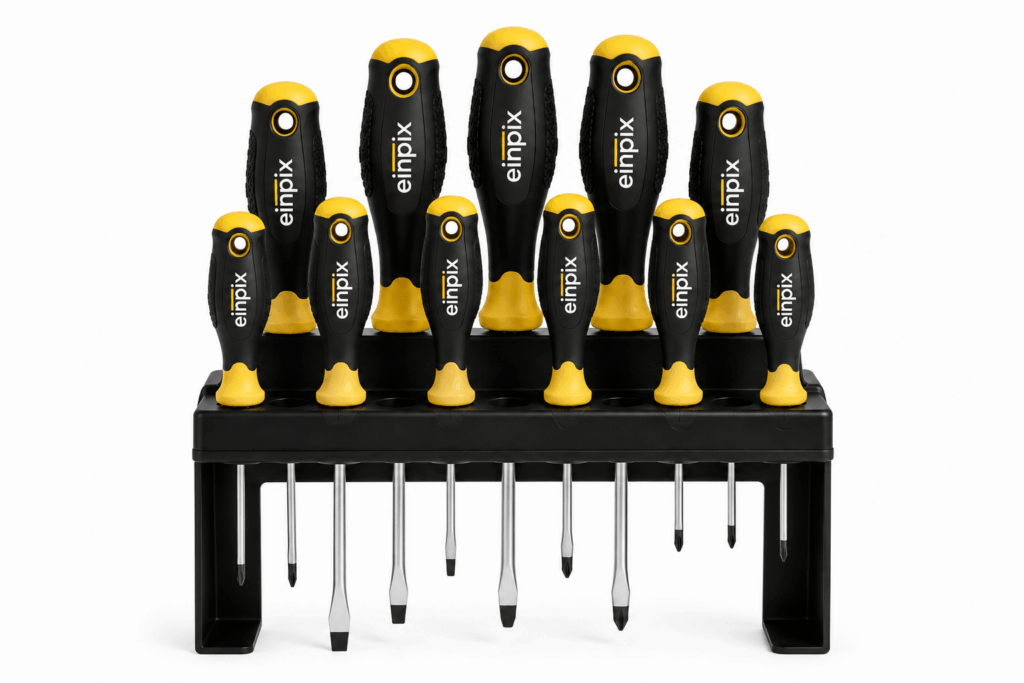
A good HVAC screwdriver set usually includes Phillips, flathead, and multi-bit options because technicians constantly remove access panels, tighten terminals, and adjust control components. Multi-bit drivers reduce how many separate tools need to be carried between jobs.
- Expected price range: €15–€40
- Expected lifespan: 3–8 years depending on handle wear and tip condition
2. Nut driver set
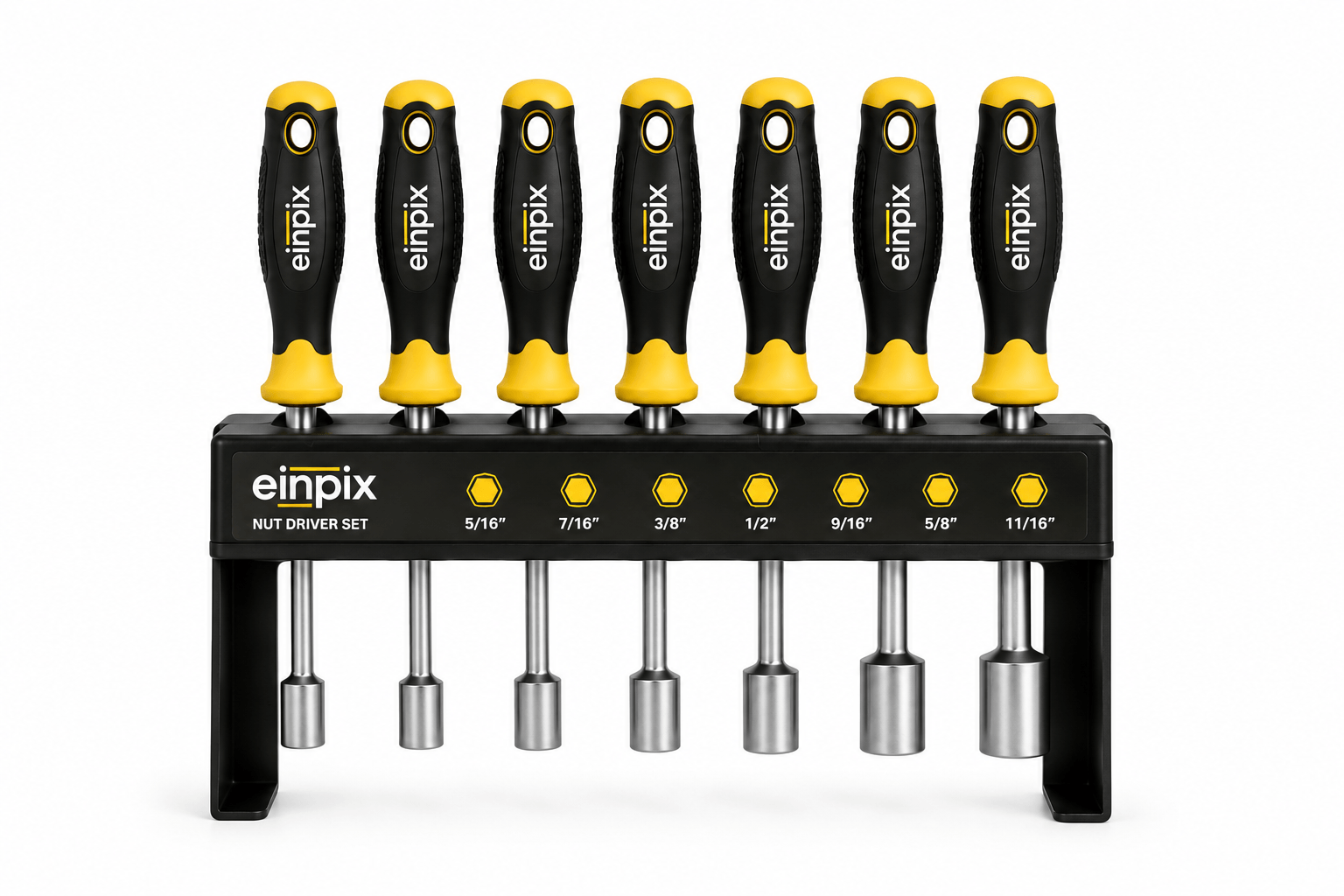
Nut drivers are designed for hex-head fasteners commonly found on HVAC housings, brackets, and equipment covers. Carrying several sizes is useful because manufacturers often vary their fasteners even within the same system.
- Expected price range: €15–€35
- Expected lifespan: 5–10 years with normal use
3. Needle nose pliers
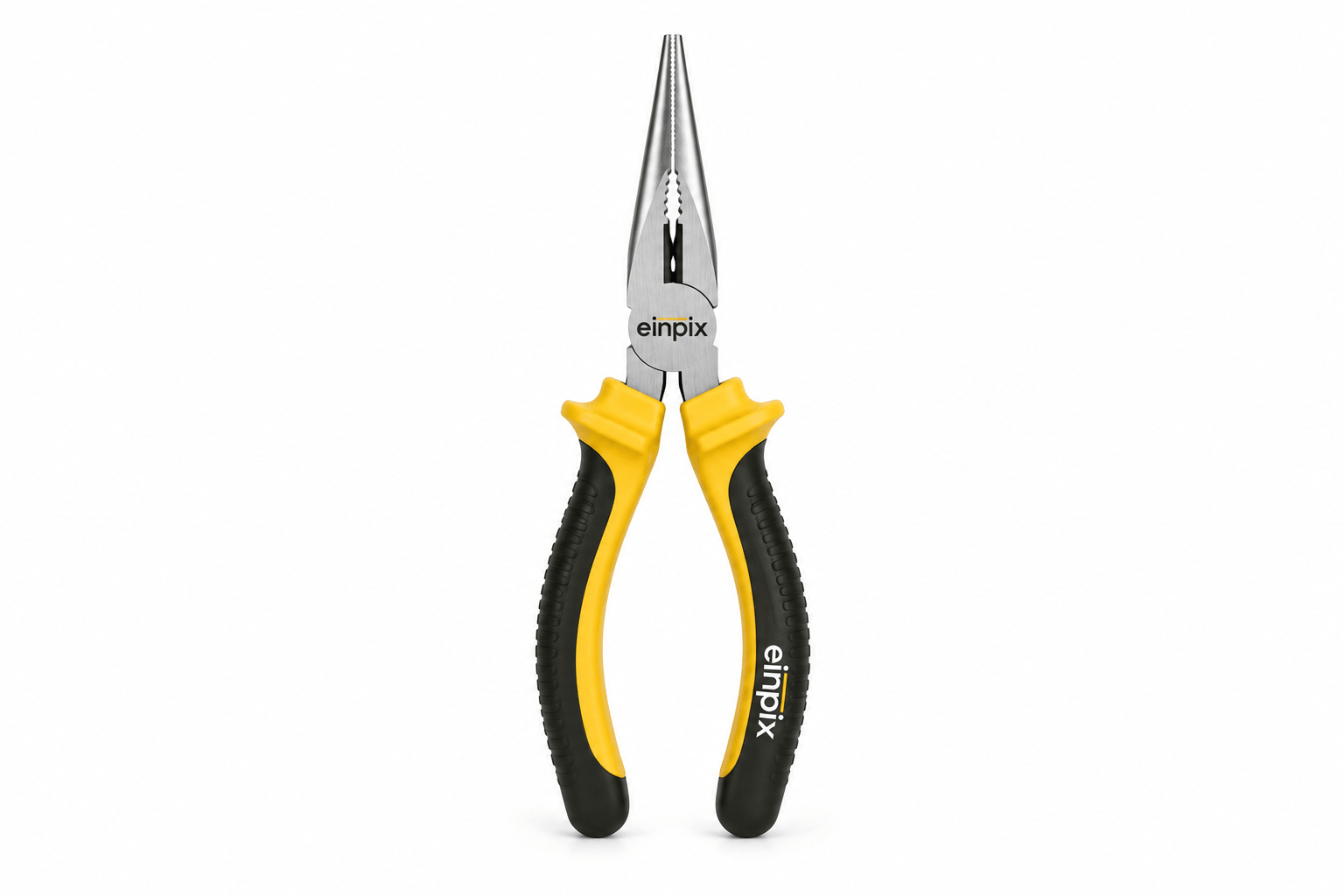
Needle nose pliers help grip wires, connectors, and small components in tight spaces where larger pliers become awkward. They are especially useful inside compact control panels and terminal areas.
- Expected price range: €8–€20
- Expected lifespan: 3–8 years depending on grip wear and jaw alignment
4. Wire strippers
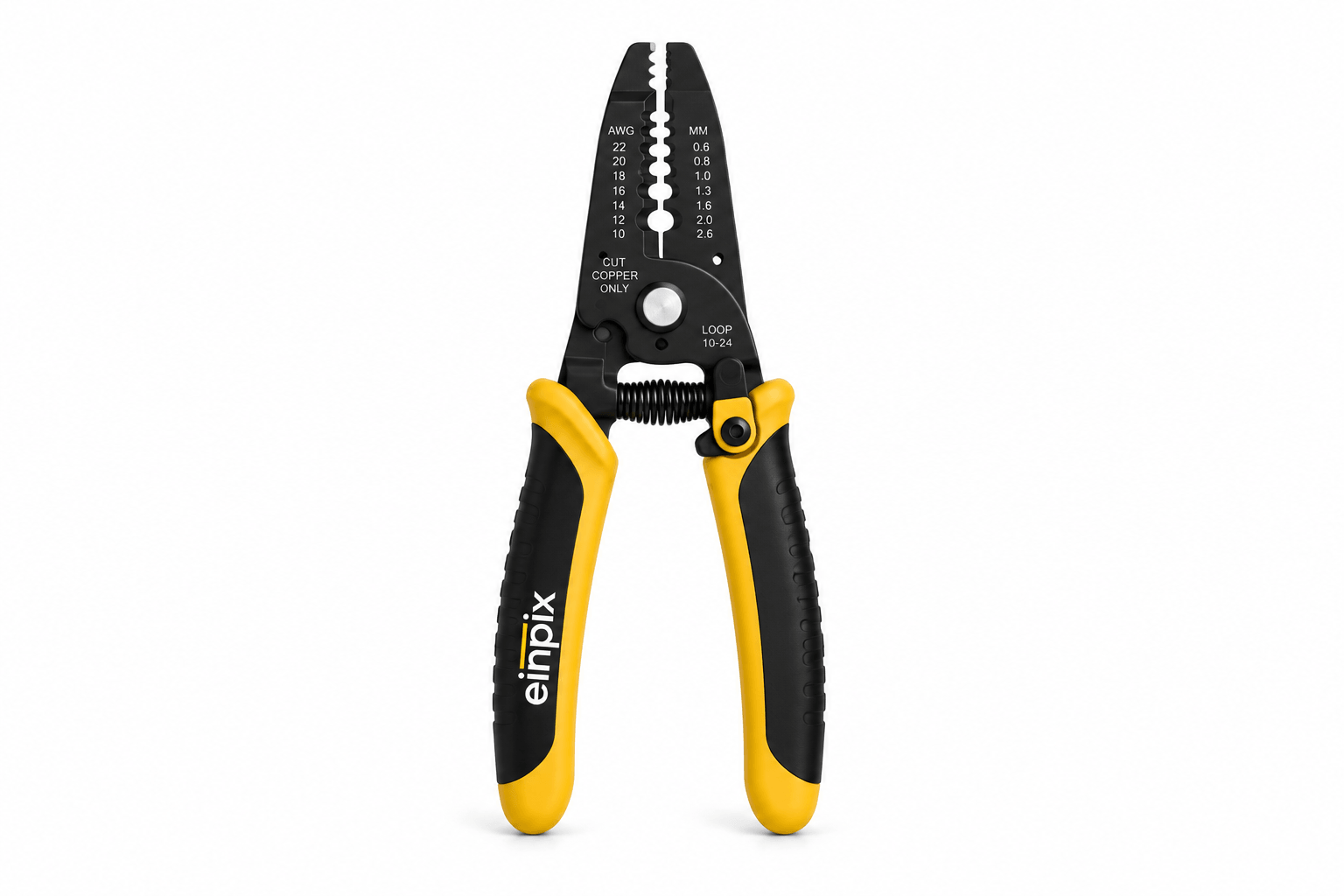
Wire strippers remove insulation cleanly without damaging the conductor underneath, which is essential for safe and reliable electrical connections. Poor stripping often leads to weak terminals or damaged conductors.
Expected price range: €10–€25
Expected lifespan: 3–6 years depending on blade wear
5. Tin snips
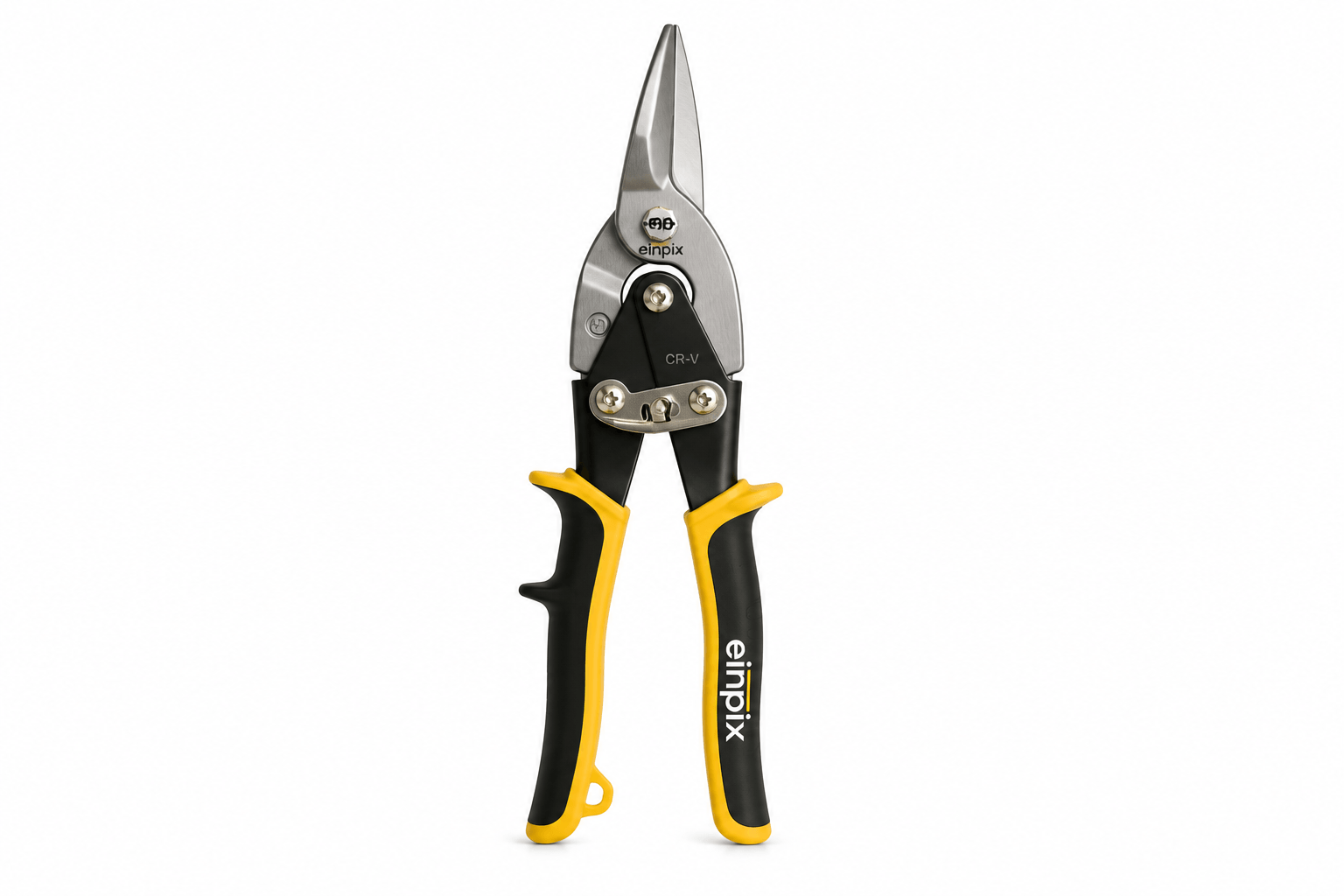
Tin snips are used when cutting sheet metal for ductwork, panel adjustments, or mounting modifications. HVAC technicians often carry more than one type to handle straight and curved cuts more easily.
Expected price range: €10–€30
Expected lifespan: 4–8 years depending on frequency of use
6. Tape measure
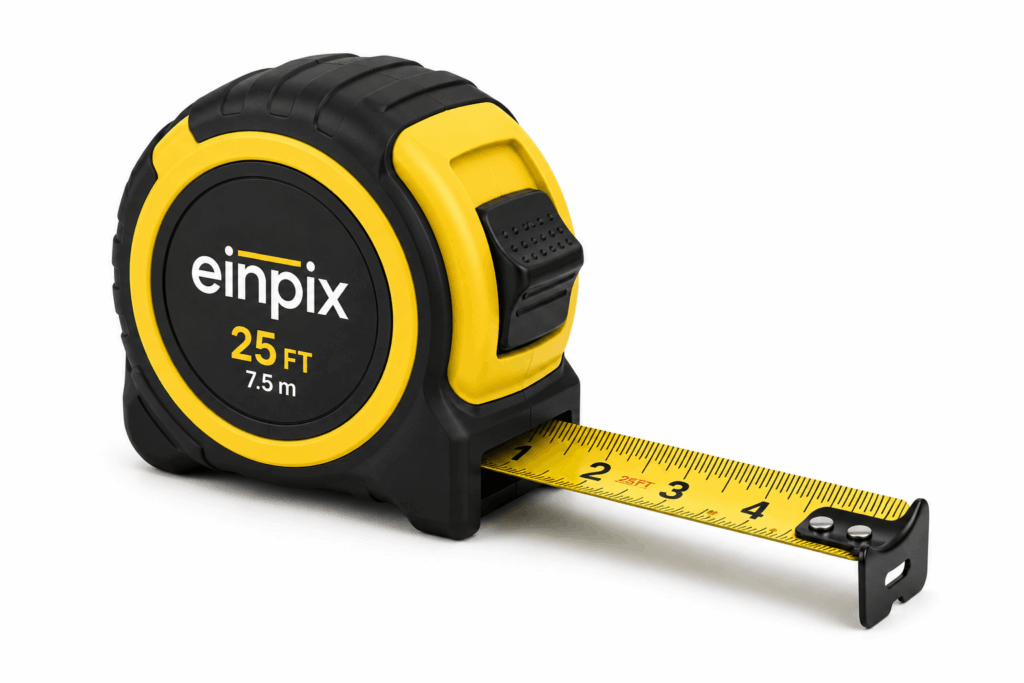
A tape measure is used constantly during HVAC installation work, from checking duct clearances and mounting distances to confirming pipe runs and equipment spacing. Even on service calls, quick measurements often help when replacing components or planning adjustments.
Expected price range: €5–€20
Expected lifespan: 3–8 years depending on casing durability and blade wear
7. Hammer
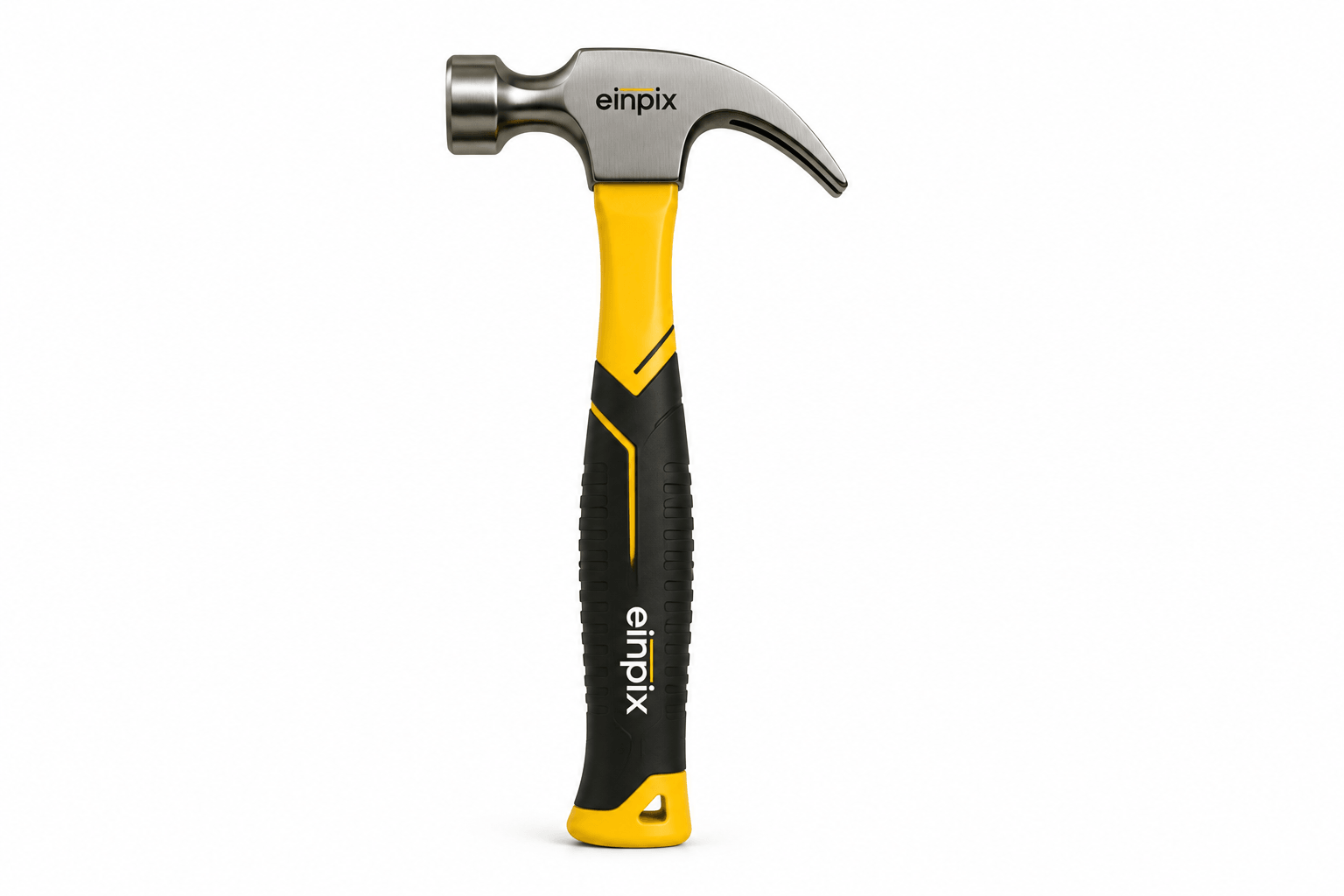
A hammer is still useful in HVAC work for fixing brackets, adjusting mountings, tapping anchors into place, or handling light demolition during replacement work. Although it is less specialised than many other tools, it remains a regular part of many technician tool bags.
Expected price range: €10–€25
Expected lifespan: 5–10 years or longer with normal use
8. Cordless drill
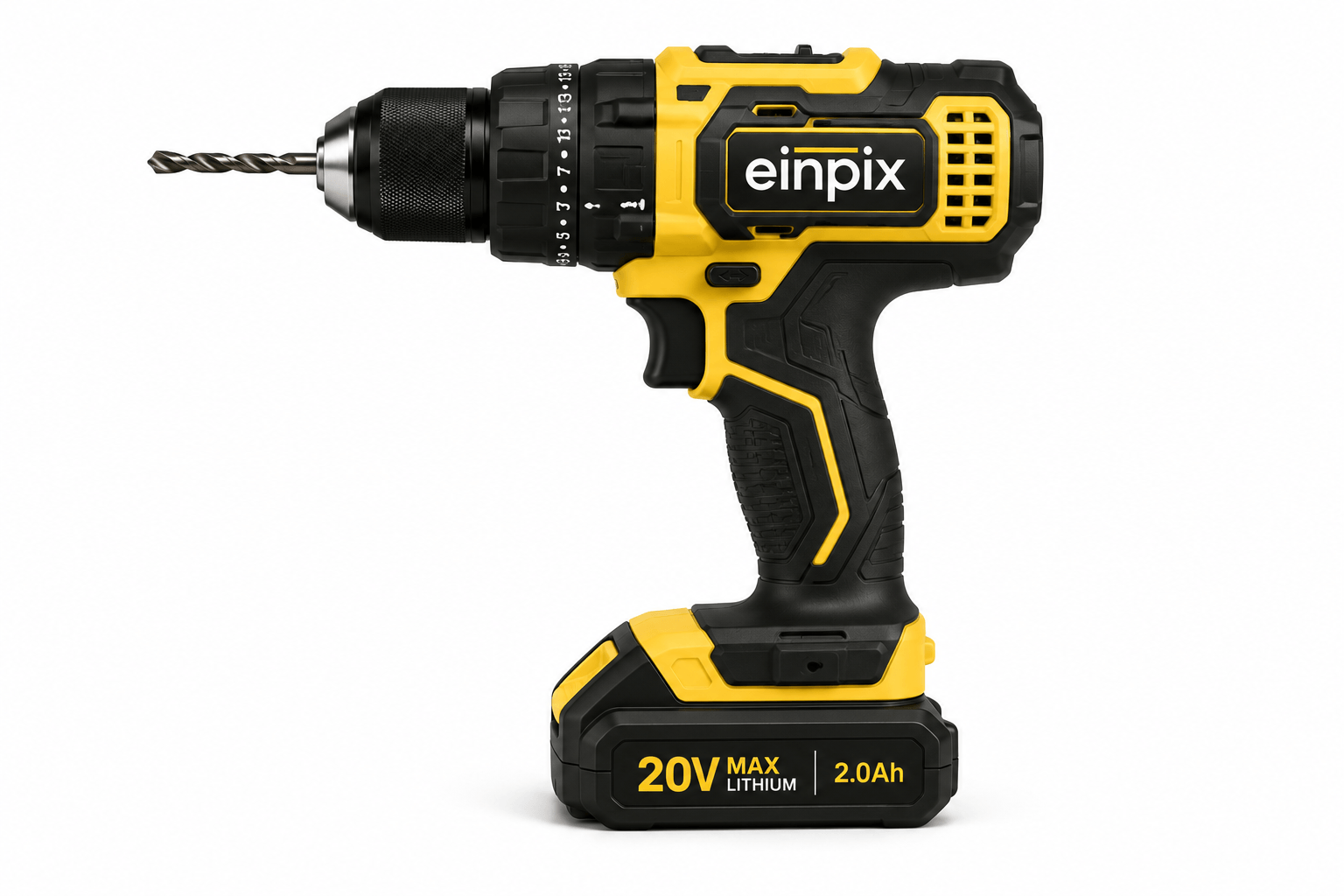
A cordless drill speeds up installation work significantly by handling brackets, fasteners, and pilot holes quickly. On larger jobs, it often becomes one of the most heavily used tools in the van.
Expected price range: €80–€250 depending on battery system and brand
Expected lifespan: 4–7 years, with batteries usually needing replacement earlier
HVAC diagnostic tools for testing systems accurately
Diagnostic tools allow technicians to move beyond visual inspection and understand how a system is performing electrically, thermally, and under refrigerant load.
9. Digital multimeter
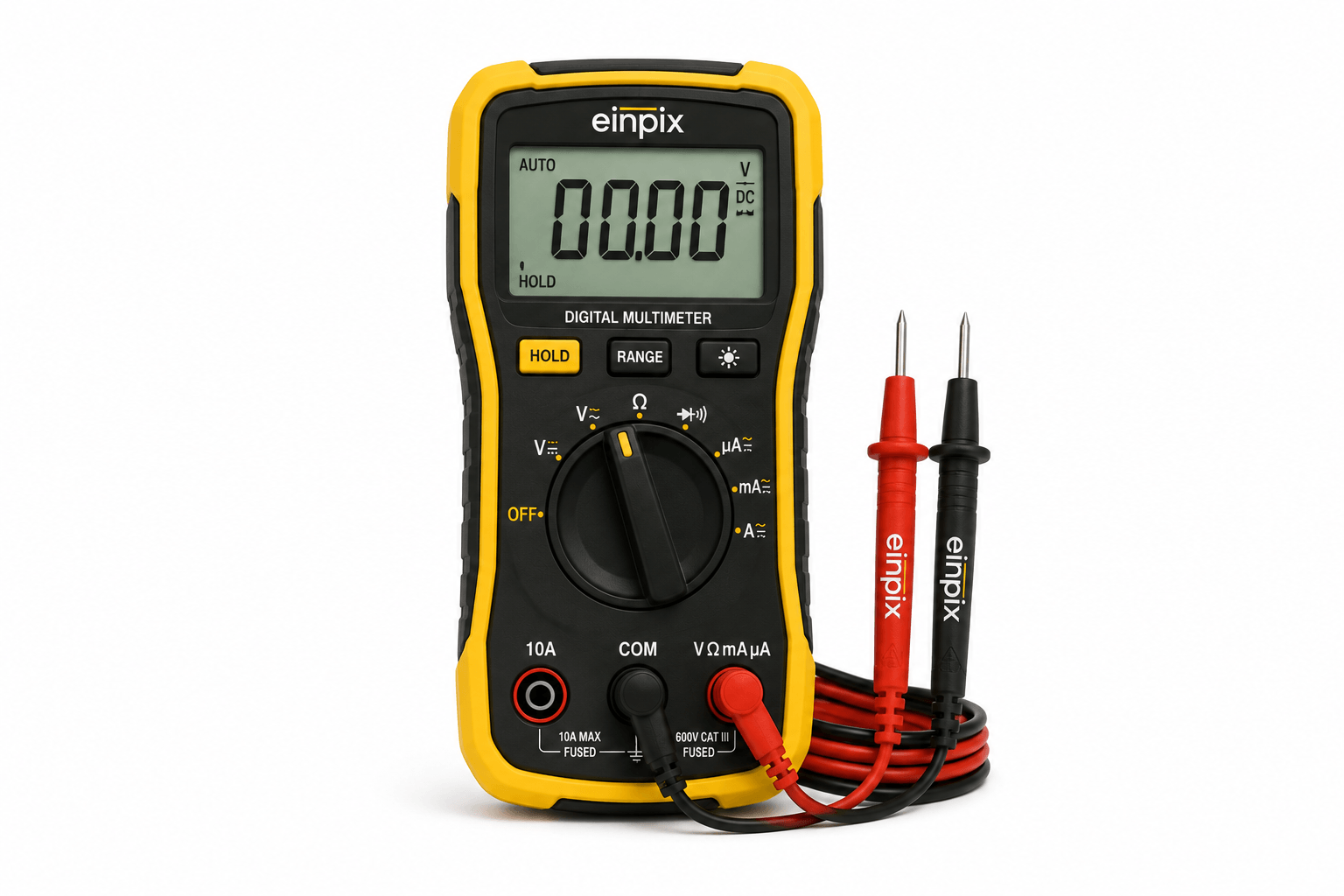
A digital multimeter measures voltage, resistance, and continuity, making it one of the most important HVAC diagnostic tools. It is used daily when checking power supply, capacitors, relays, and control circuits.
Expected price range: €25–€120 depending on safety rating and features
Expected lifespan: 5–10 years if stored carefully and leads are replaced when worn
10. Clamp meter
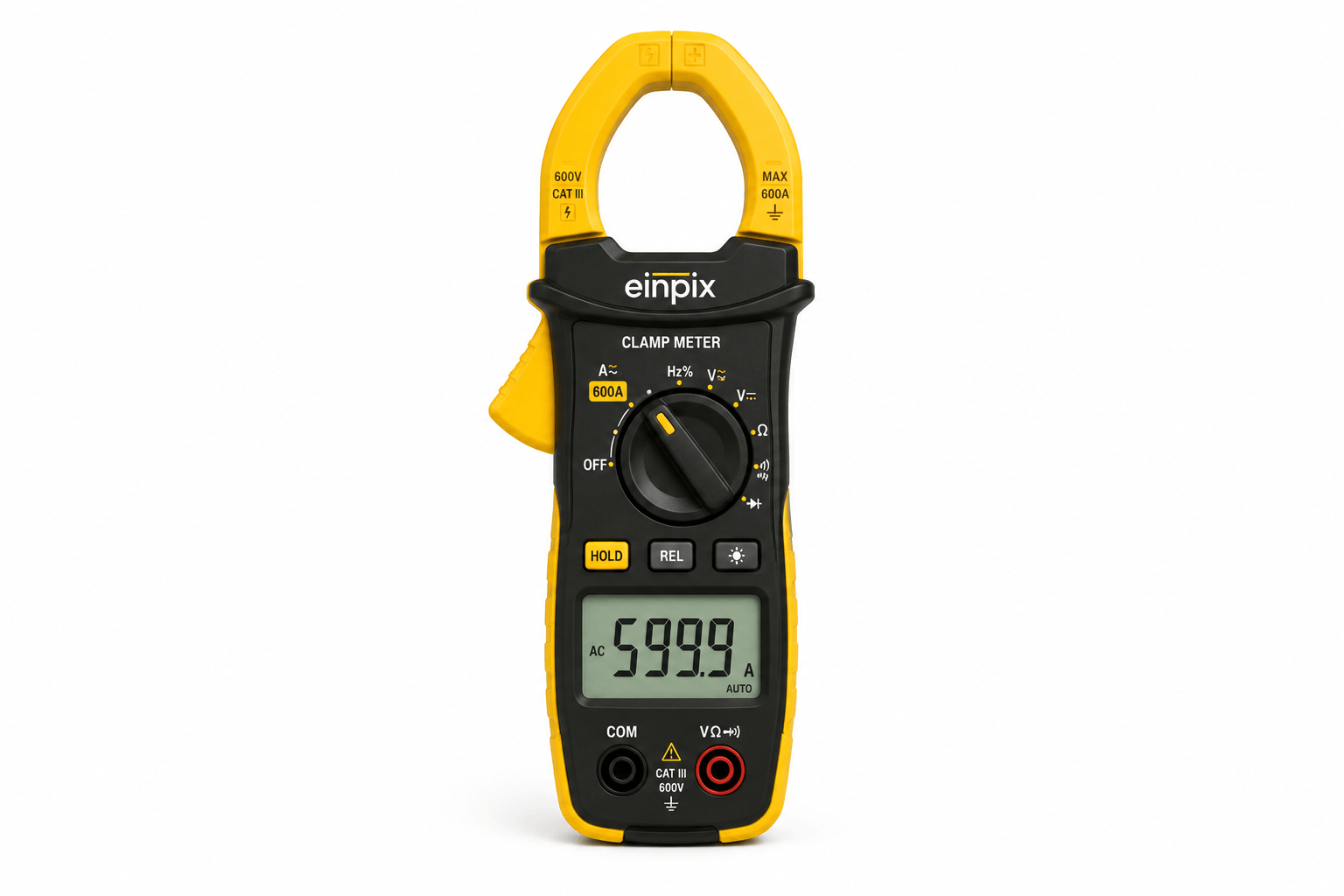
Clamp meters measure current without disconnecting wiring, which is particularly useful when checking compressor load, fan motors, and current draw during operation.
Expected price range: €40–€150
Expected lifespan: 5–10 years
11. Manifold gauge set
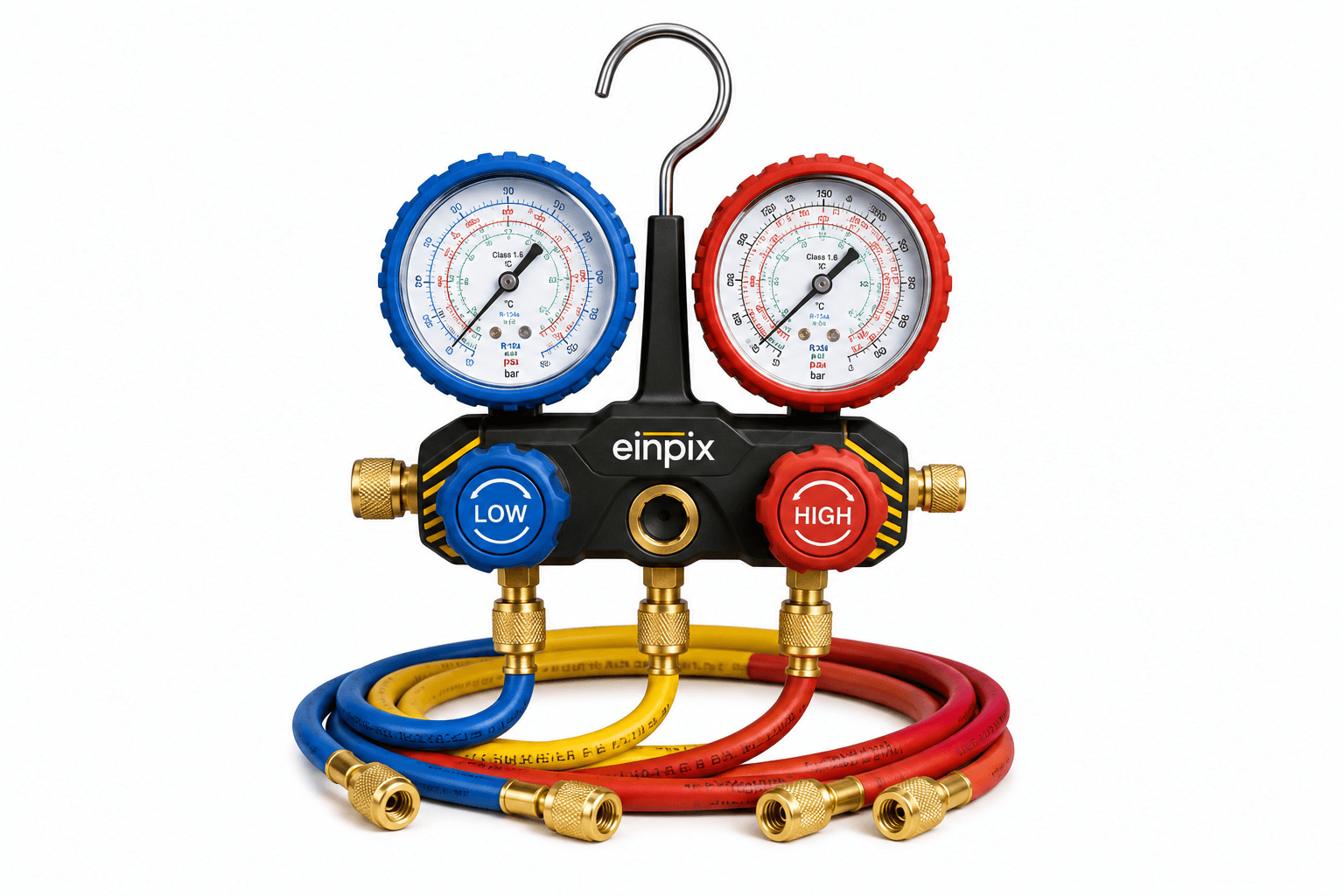
A manifold gauge set measures refrigerant pressure and helps determine whether a system is overcharged, undercharged, restricted, or leaking. It remains one of the most recognisable HVAC tools because it directly shows system pressure behaviour.
Expected price range: €50–€150 for analog models, €250+ for digital versions
Expected lifespan: 5–10 years; hoses usually need replacing sooner
12. Non-contact voltage tester
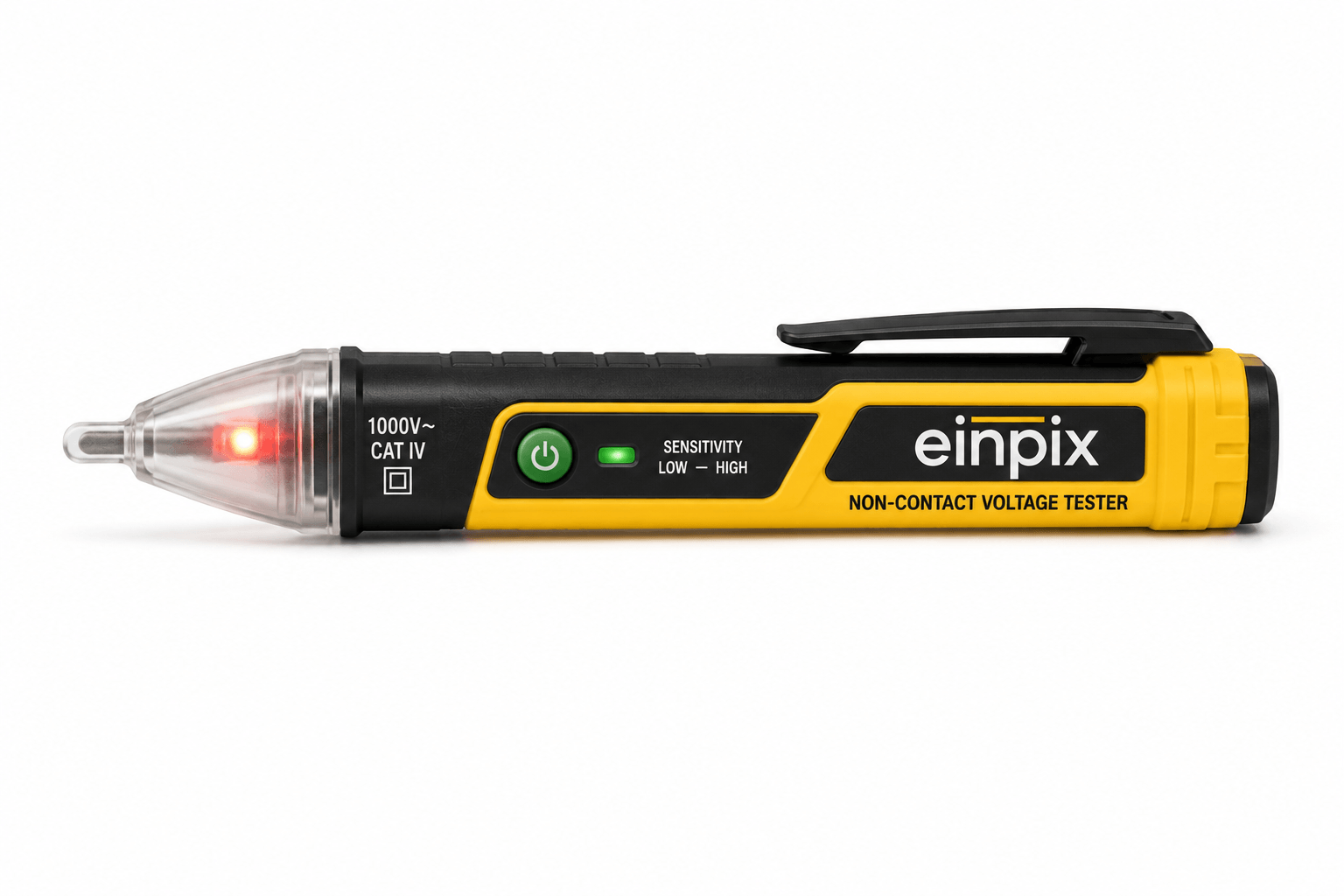
A non-contact voltage tester gives a quick first safety check before opening electrical components or touching suspected live circuits.
Expected price range: €10–€30
Expected lifespan: 3–5 years with battery replacement
13. Refrigerant leak detector
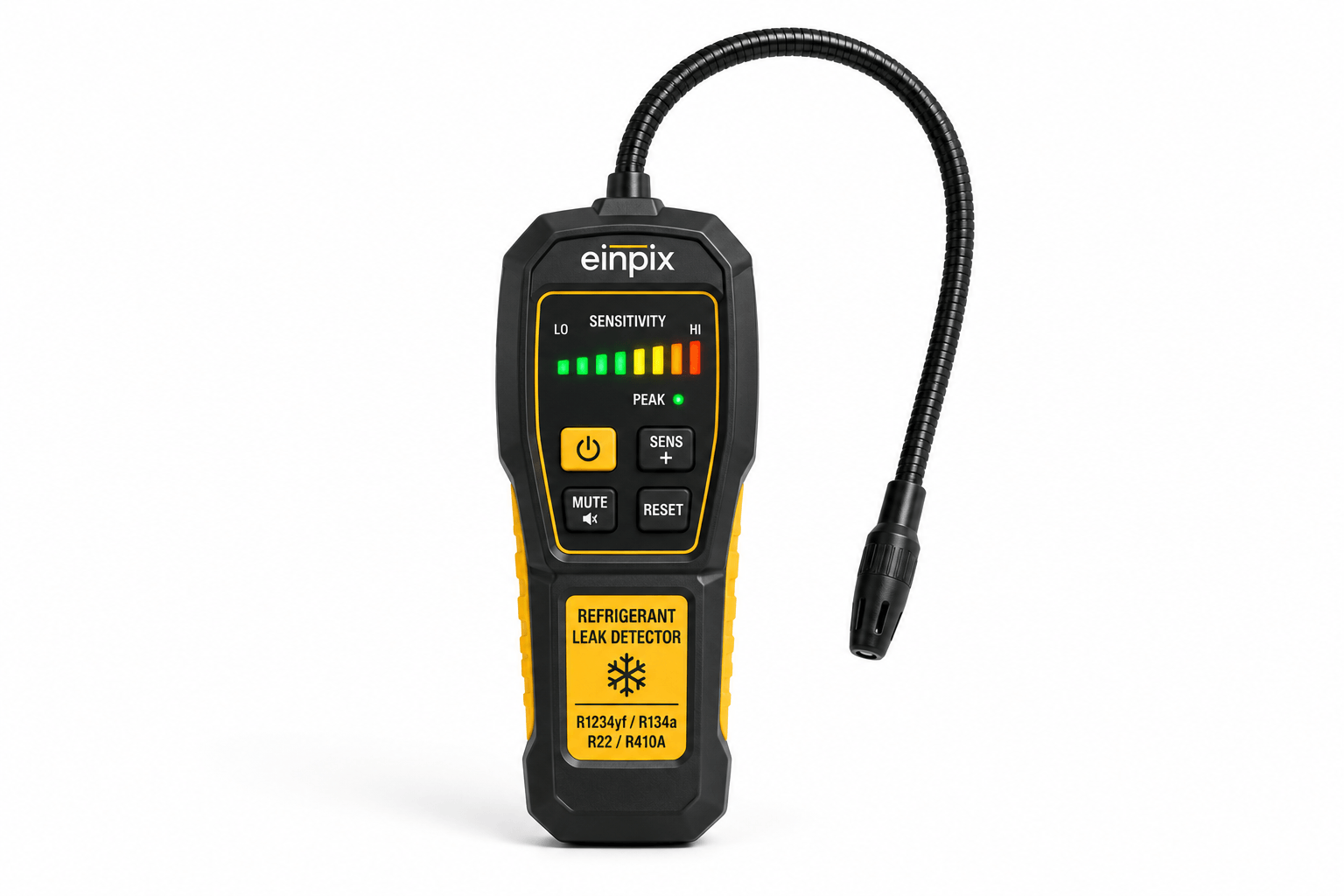
Leak detectors identify refrigerant loss before performance drops significantly or larger repairs become necessary. Electronic detectors are much faster than traditional soap testing when tracing small leaks.
Expected price range: €80–€250
Expected lifespan: 3–6 years depending on sensor wear
14. Digital thermometer
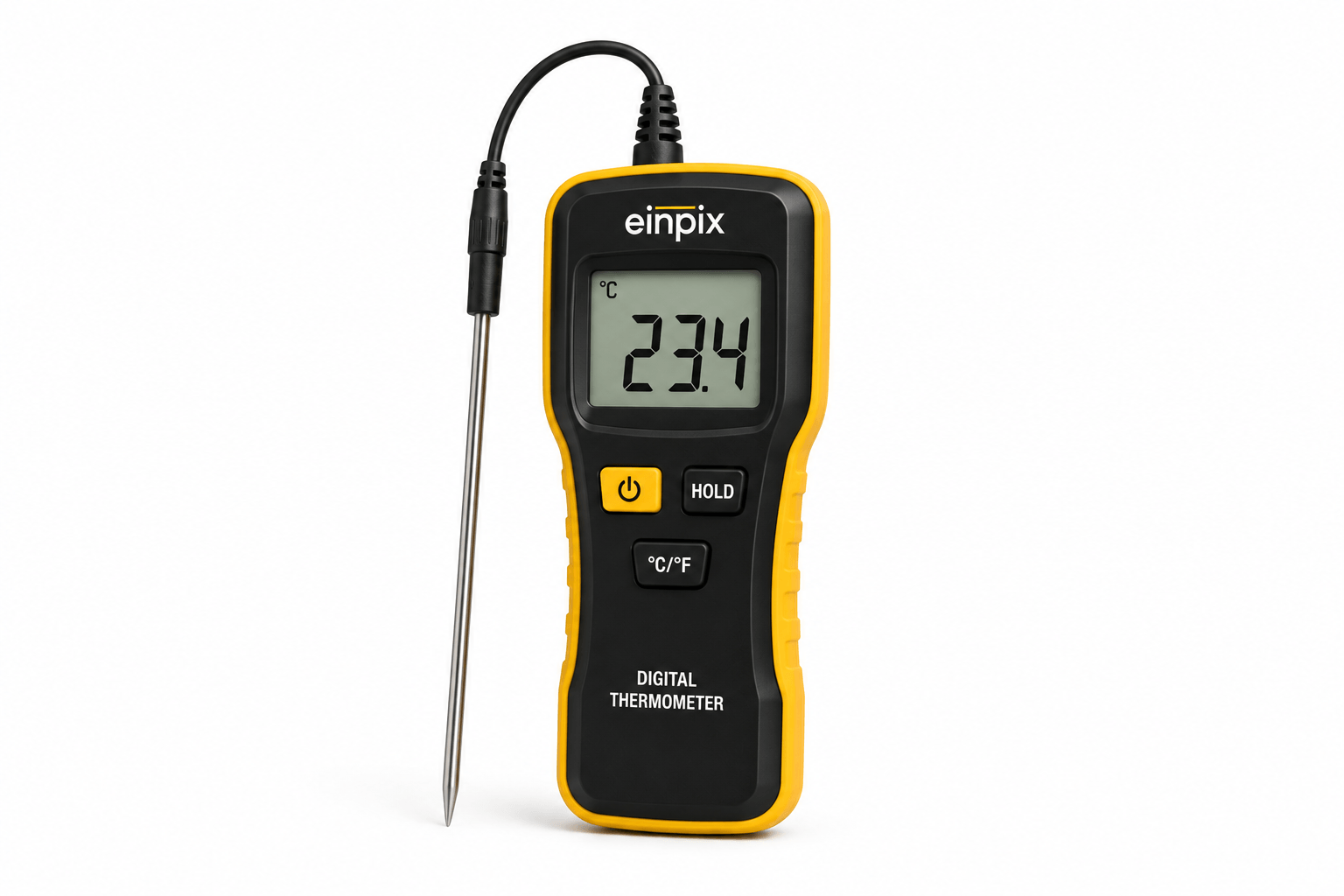
Temperature readings help verify whether airflow and refrigerant circuits are performing correctly. Supply air, return air, and line temperatures often reveal problems that pressure readings alone cannot.
Expected price range: €20–€80
Expected lifespan: 4–8 years
HVAC installation tools used on new systems and replacements
Installation work requires tools that prepare pipework properly and create reliable long-term connections.
15. Tubing cutter
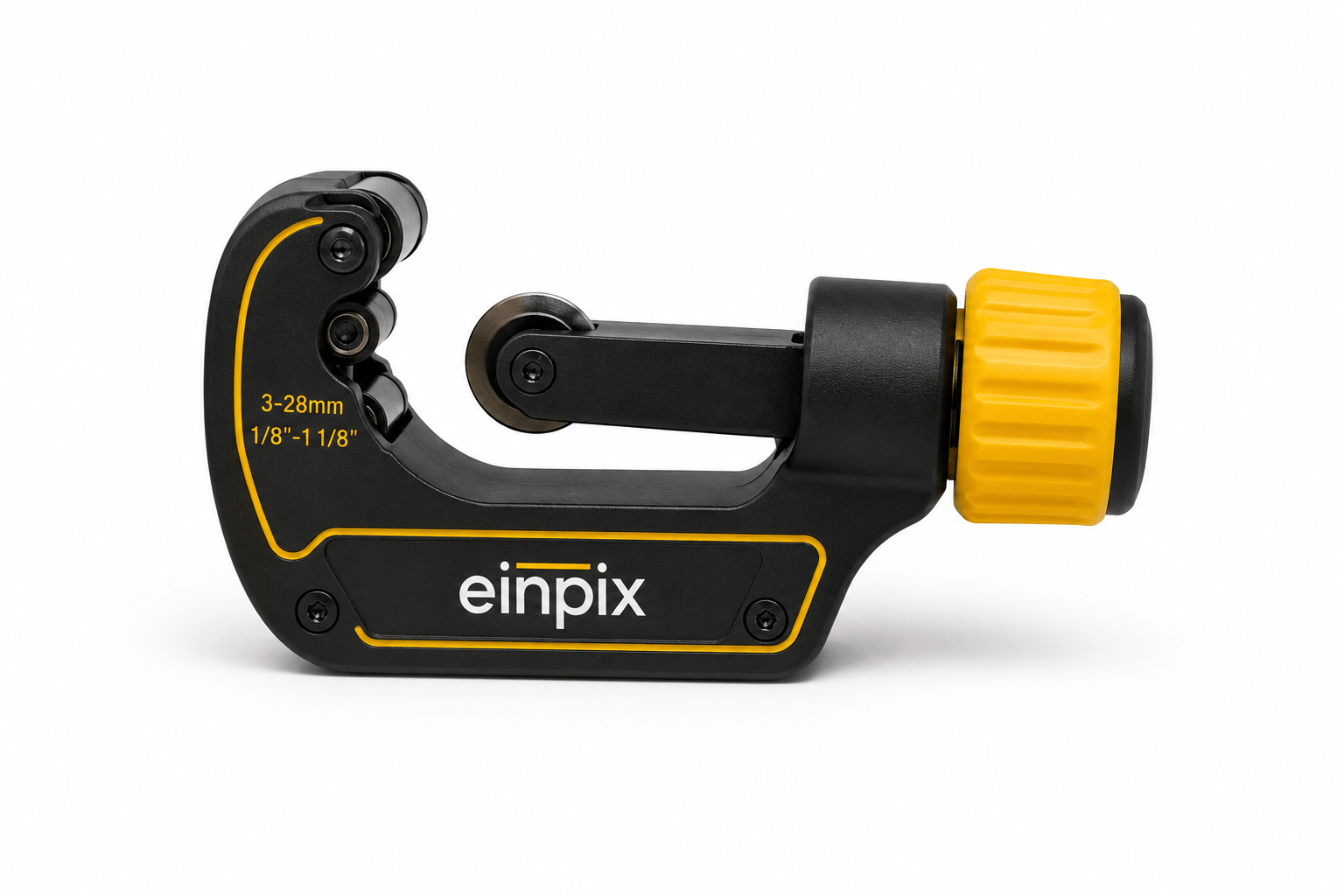
A tubing cutter creates clean cuts on copper pipe before brazing or flaring. Clean cuts improve joint quality and reduce the chance of leaks later.
Expected price range: €10–€30
Expected lifespan: 5–10 years; cutting wheels may need replacing
16. Deburring tool
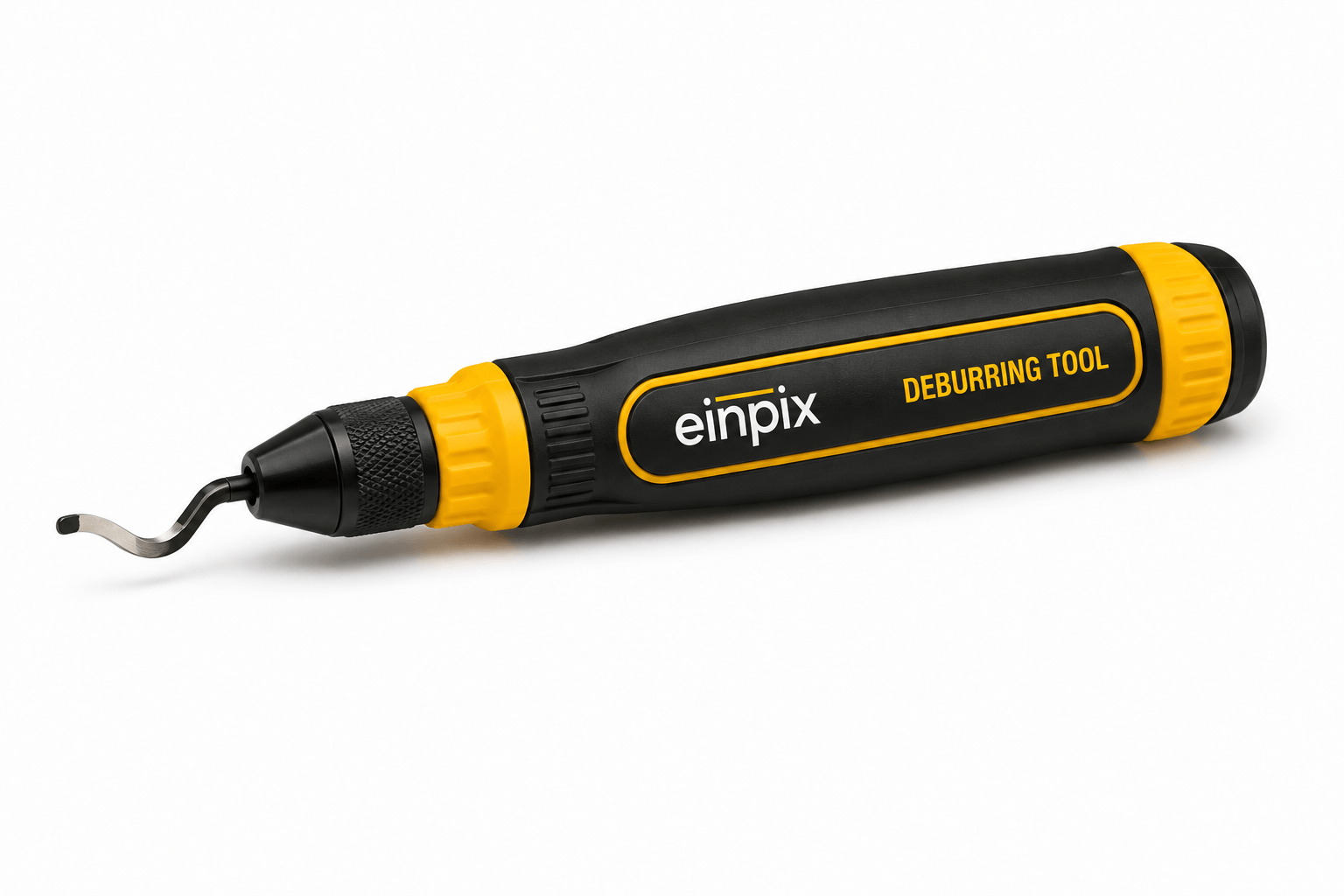
After a pipe is cut, sharp internal edges need to be removed so refrigerant can flow properly and fittings seal correctly.
Expected price range: €8–€20
Expected lifespan: 5+ years
17. Tubing bender
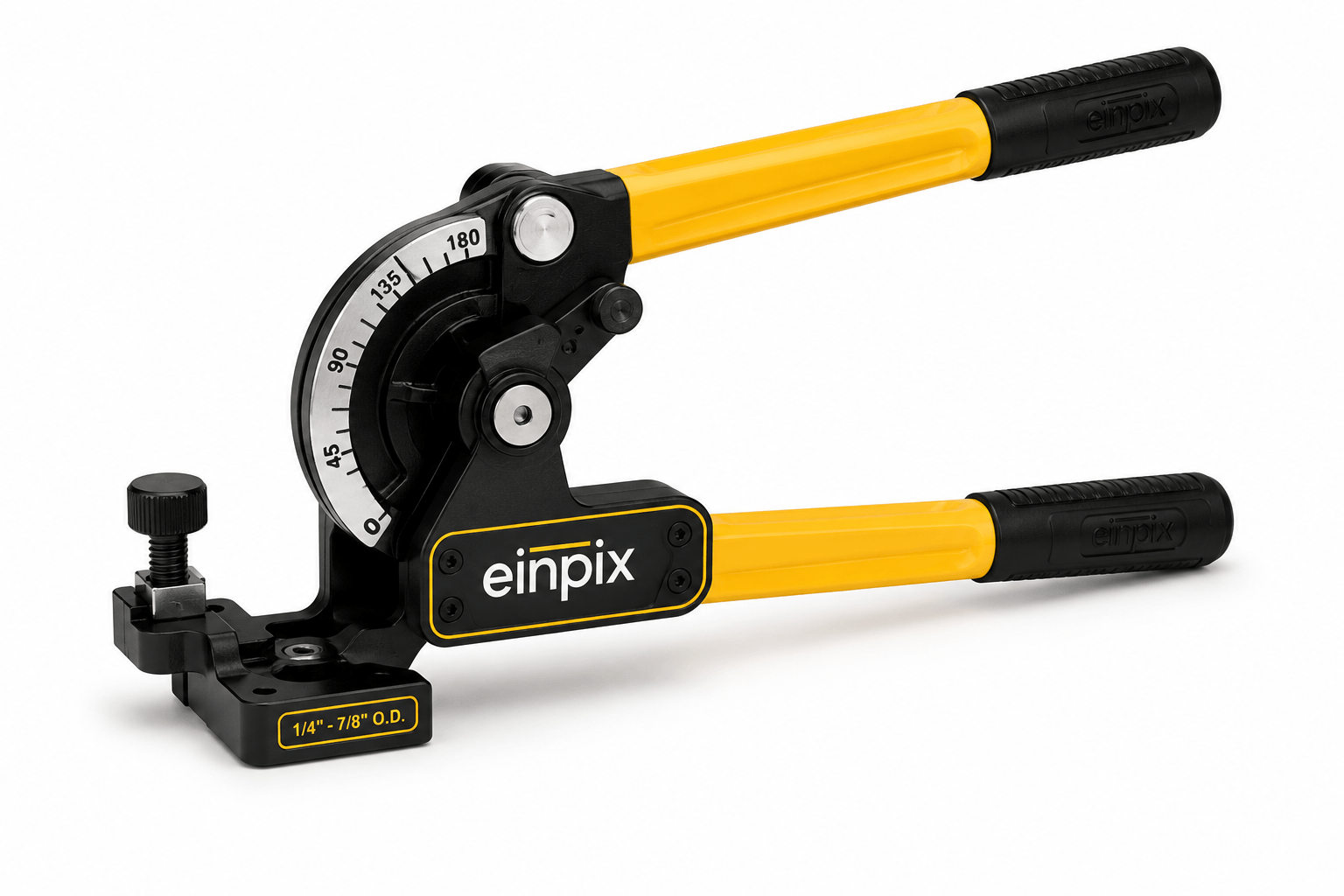
Tubing benders allow copper pipe to curve without collapsing, which improves both appearance and refrigerant flow.
Expected price range: €20–€60
Expected lifespan: 5–10 years
18. Flaring tool
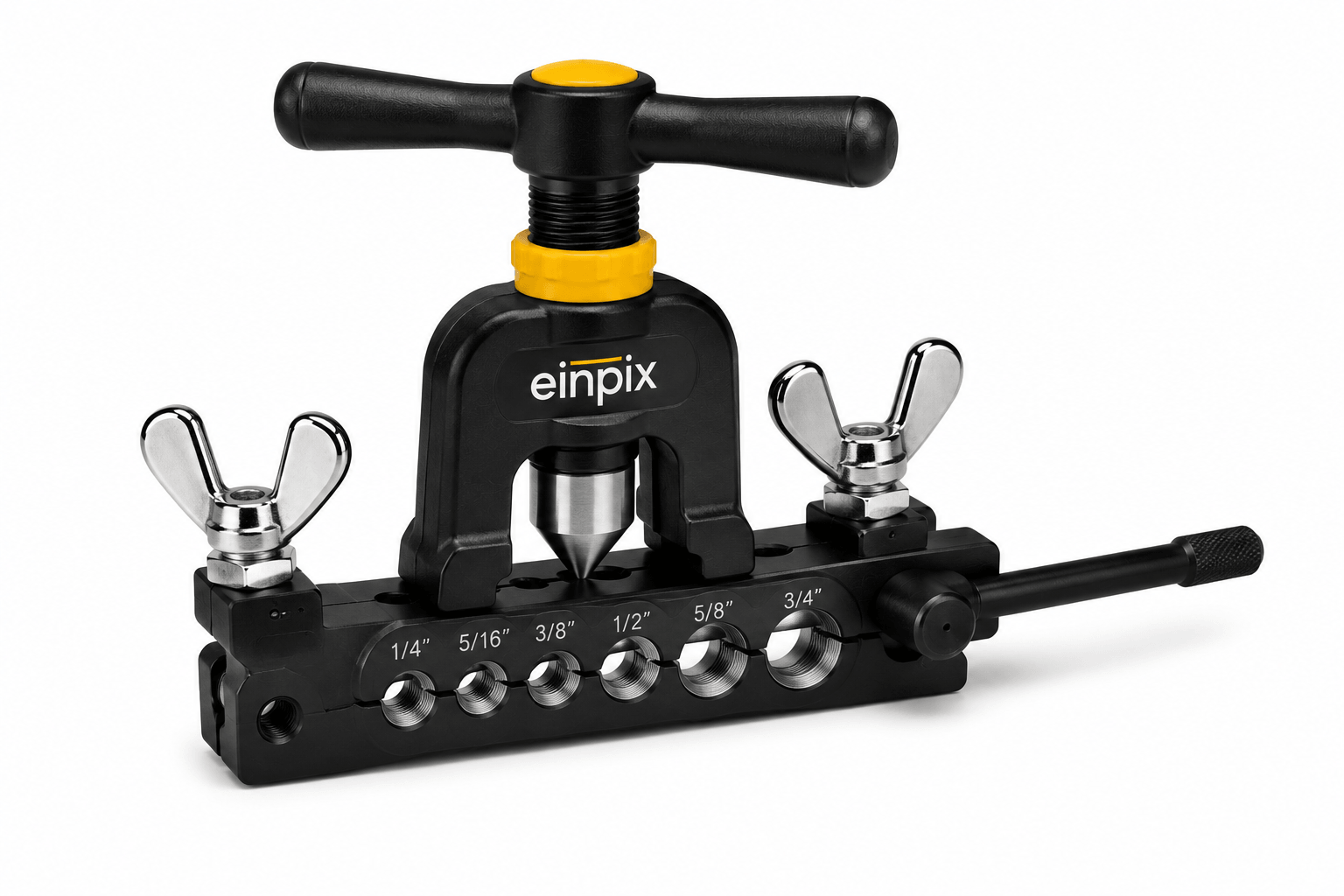
Flaring tools prepare refrigerant line ends for flare fittings, especially in split-system installations.
Expected price range: €30–€120
Expected lifespan: 5–10 years depending on build quality
19. Brazing torch
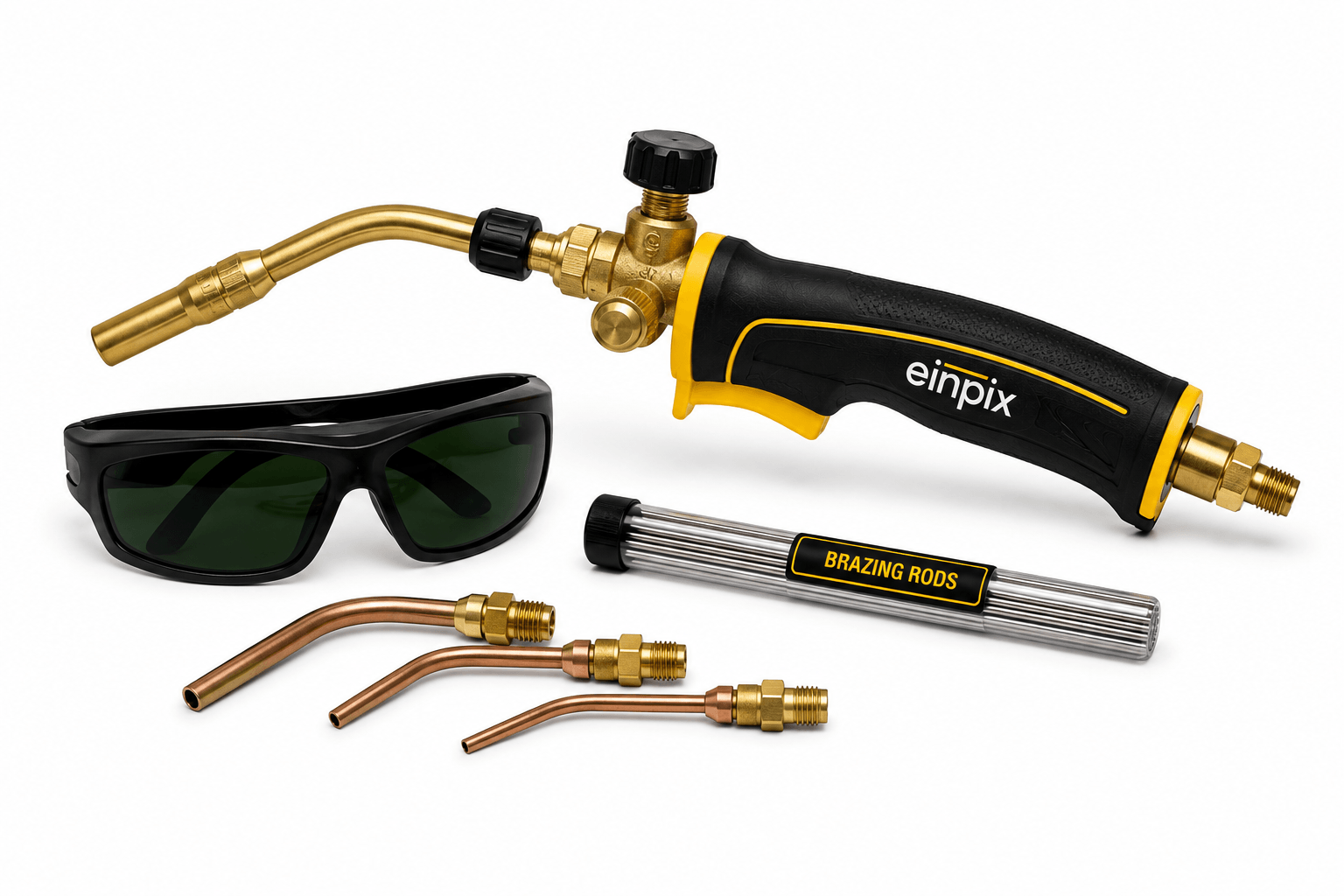
A brazing torch joins copper lines permanently during installation and repair work. Controlled heat is important to avoid damaging nearby components.
Expected price range: €50–€150
Expected lifespan: Several years with proper maintenance
20. Nitrogen regulator
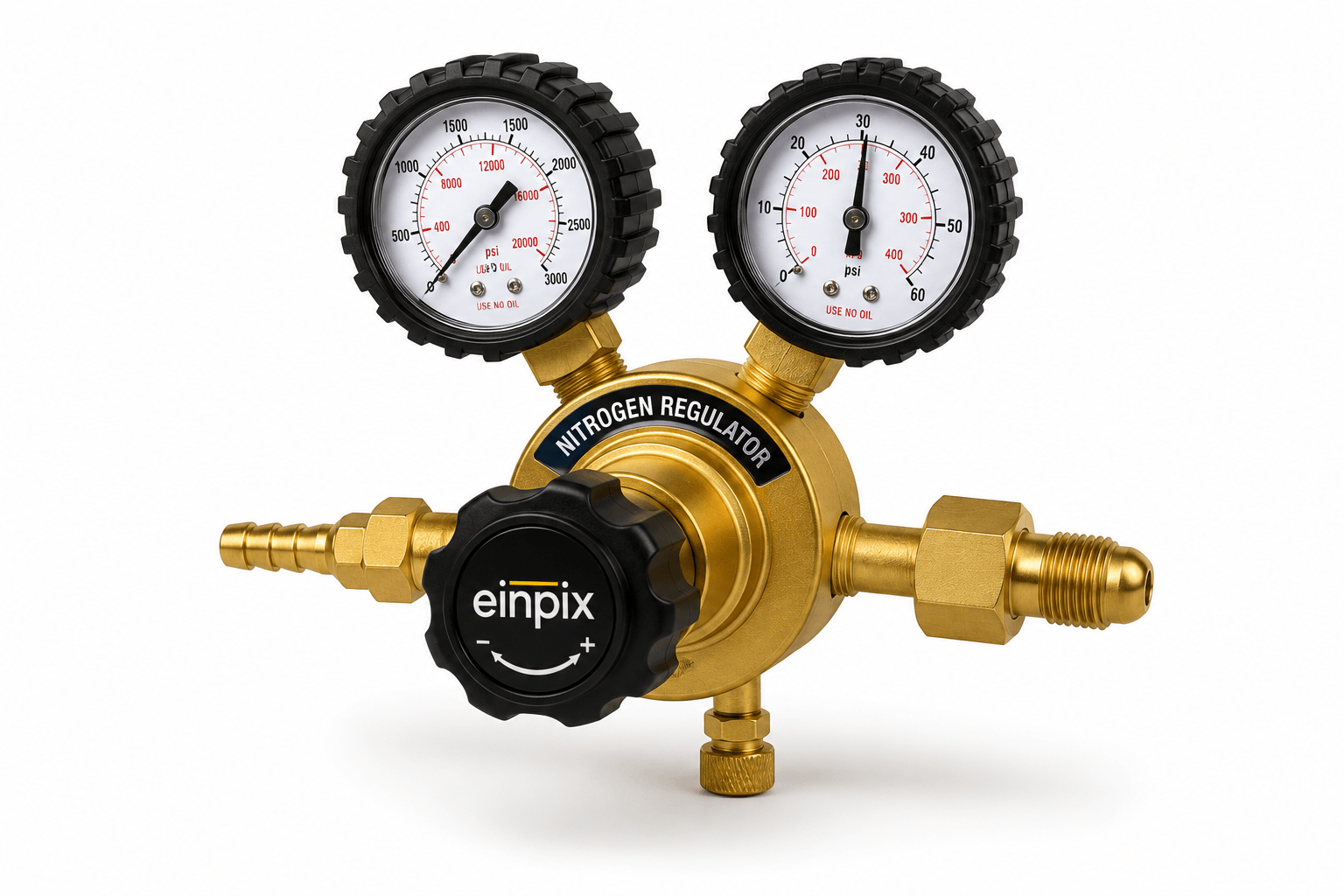
Nitrogen regulators support pressure testing and protect pipe interiors during brazing by maintaining inert gas flow.
Expected price range: €50–€120
Expected lifespan: 5–10 years
Advanced HVAC tools worth adding as your work expands
As technicians begin handling full commissioning, refrigerant recovery, and deeper diagnostics, advanced tools become harder to avoid.
21. Vacuum pump
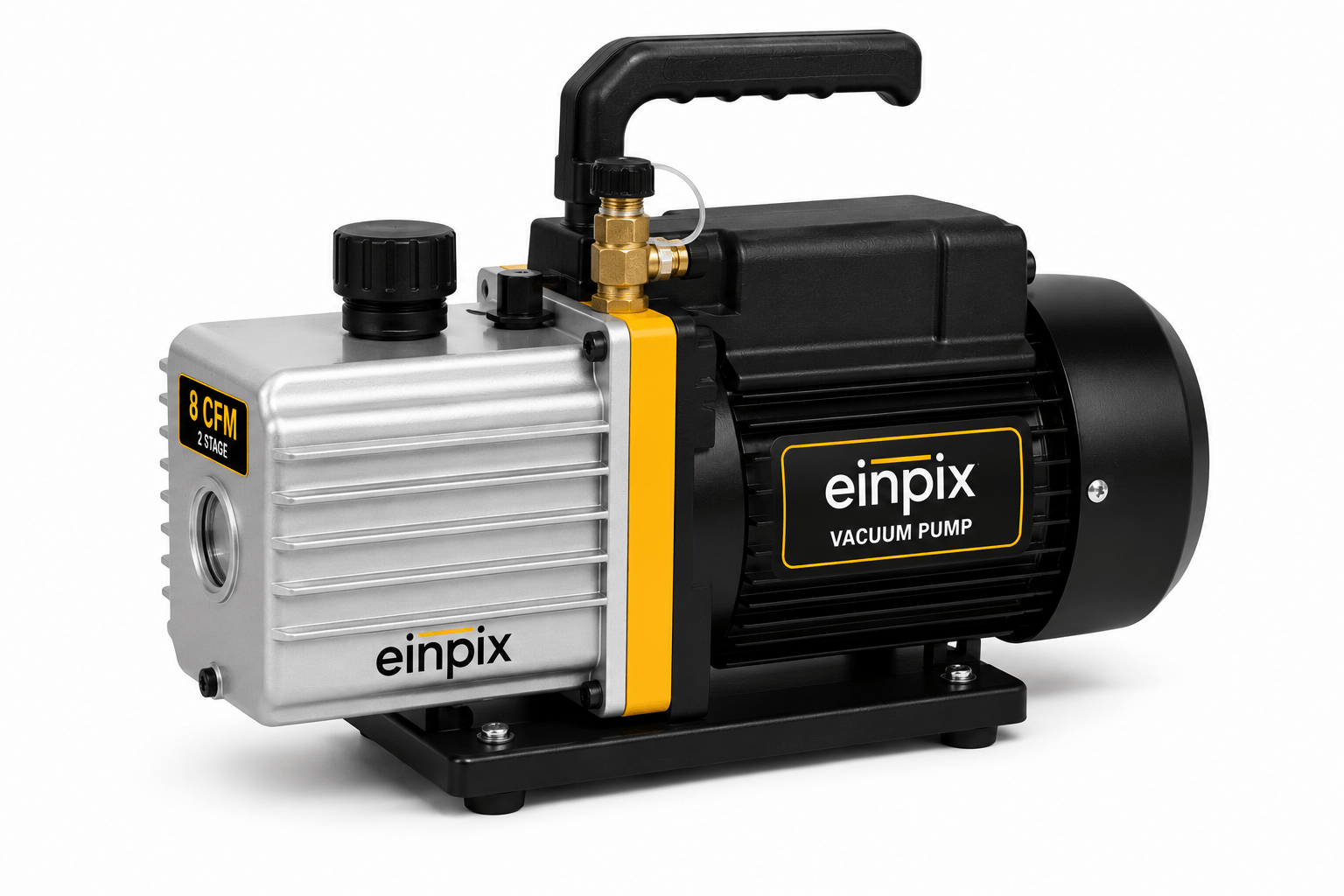
A vacuum pump removes moisture and air from refrigerant lines before charging. Proper evacuation protects long-term system reliability.
Expected price range: €100–€300
Expected lifespan: 5–10 years with oil changes and maintenance
22. Micron gauge
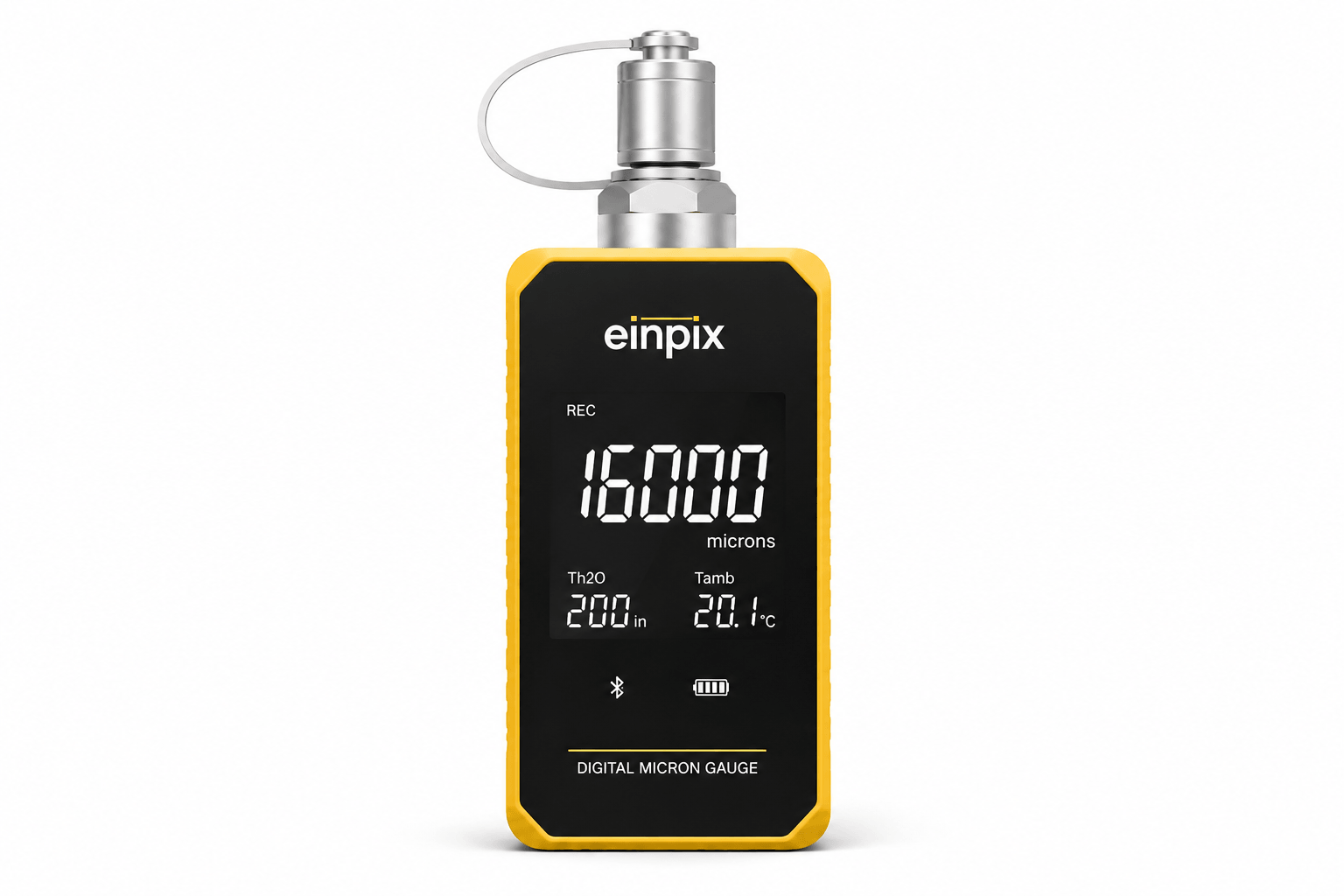
A micron gauge confirms whether evacuation has reached an acceptable vacuum level, giving much more precision than relying on gauges alone.
Expected price range: €80–€180
Expected lifespan: 5–8 years
23. Refrigerant recovery machine
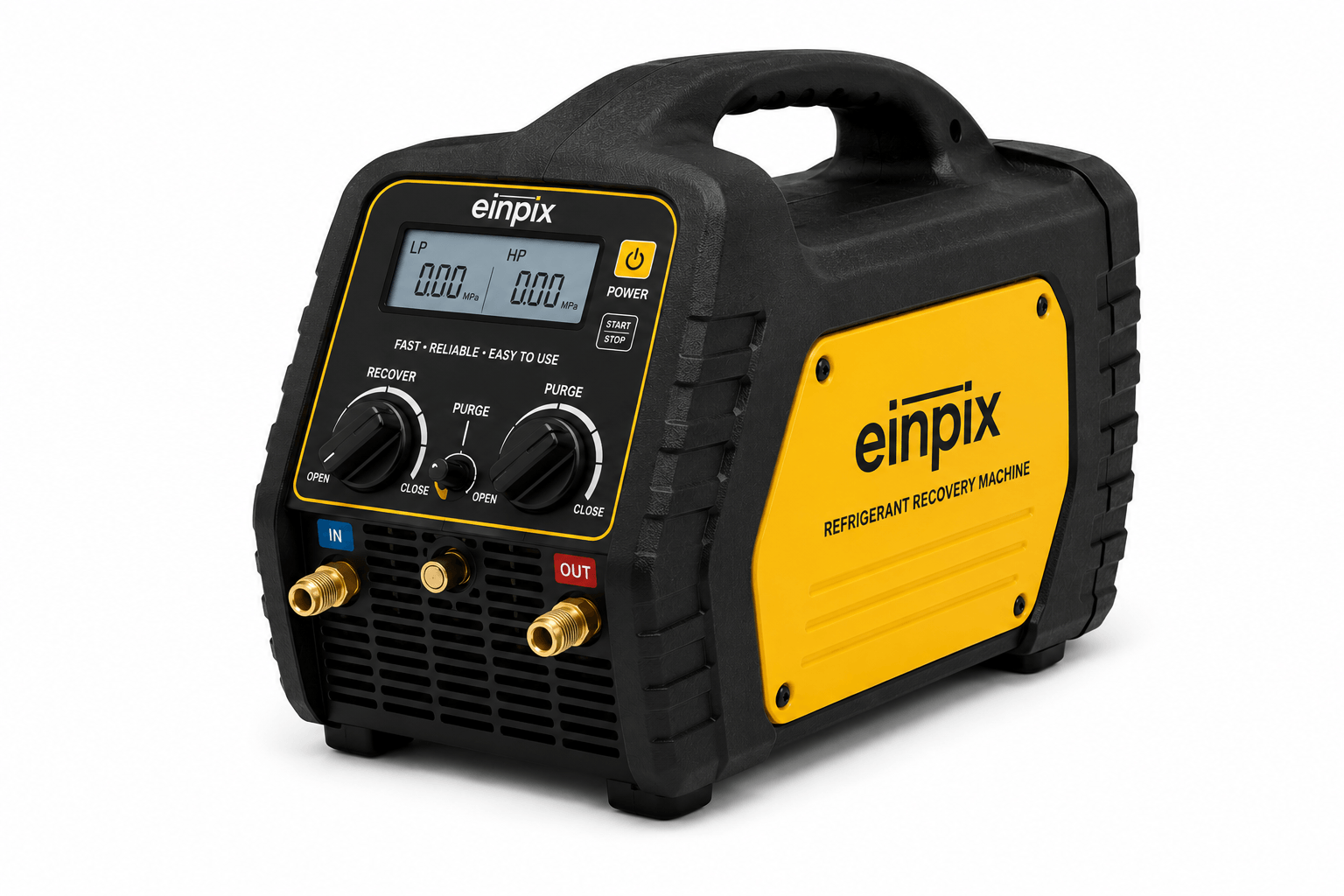
Recovery machines safely remove refrigerant before repairs or system replacement, which is essential for compliance and refrigerant handling regulations.
Expected price range: €400–€900
Expected lifespan: 5–8 years depending on usage
24. Refrigerant scale
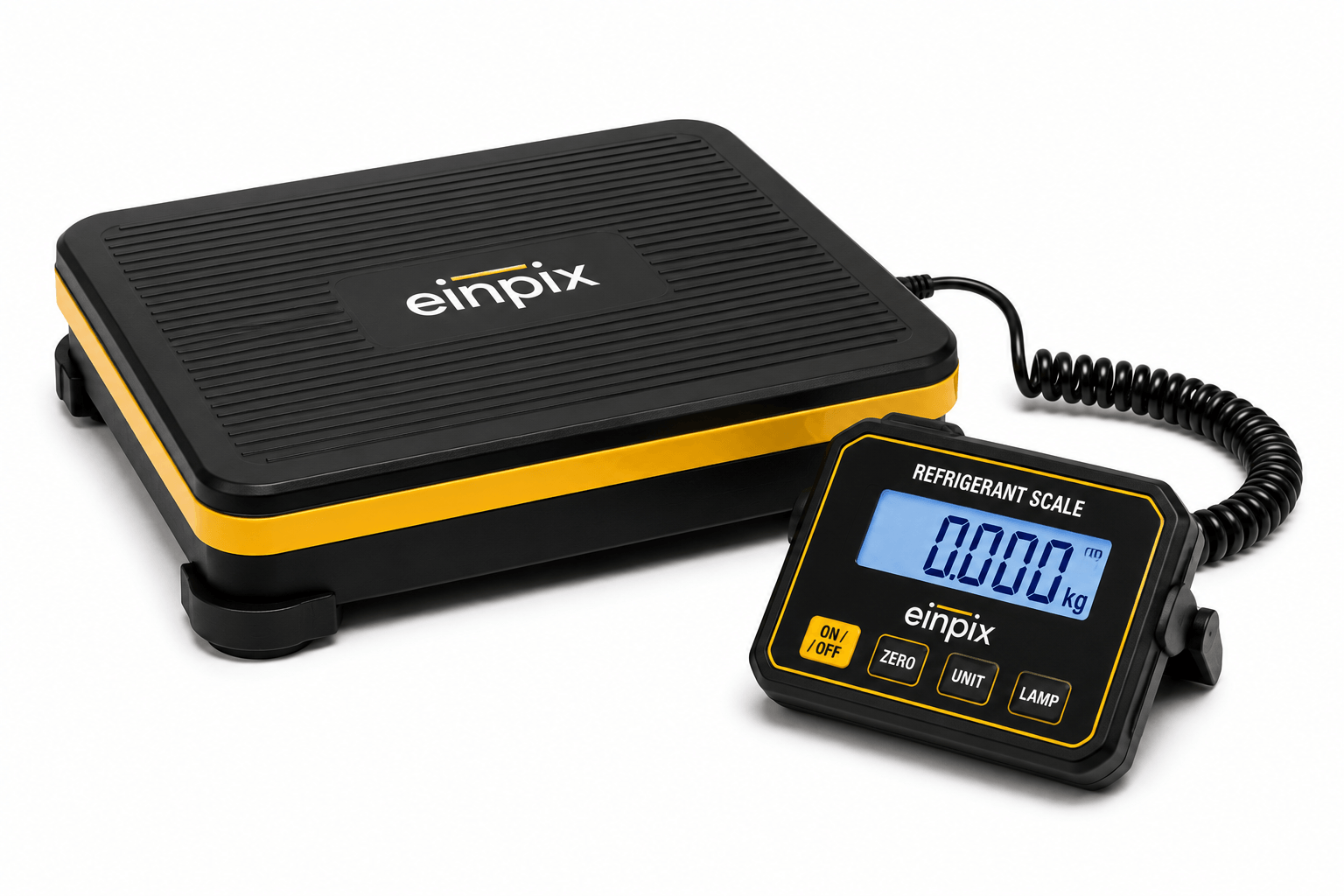
A refrigerant scale ensures refrigerant is charged accurately by weight rather than estimation.
Expected price range: €80–€180
Expected lifespan: 5–8 years
25. Thermal imaging camera
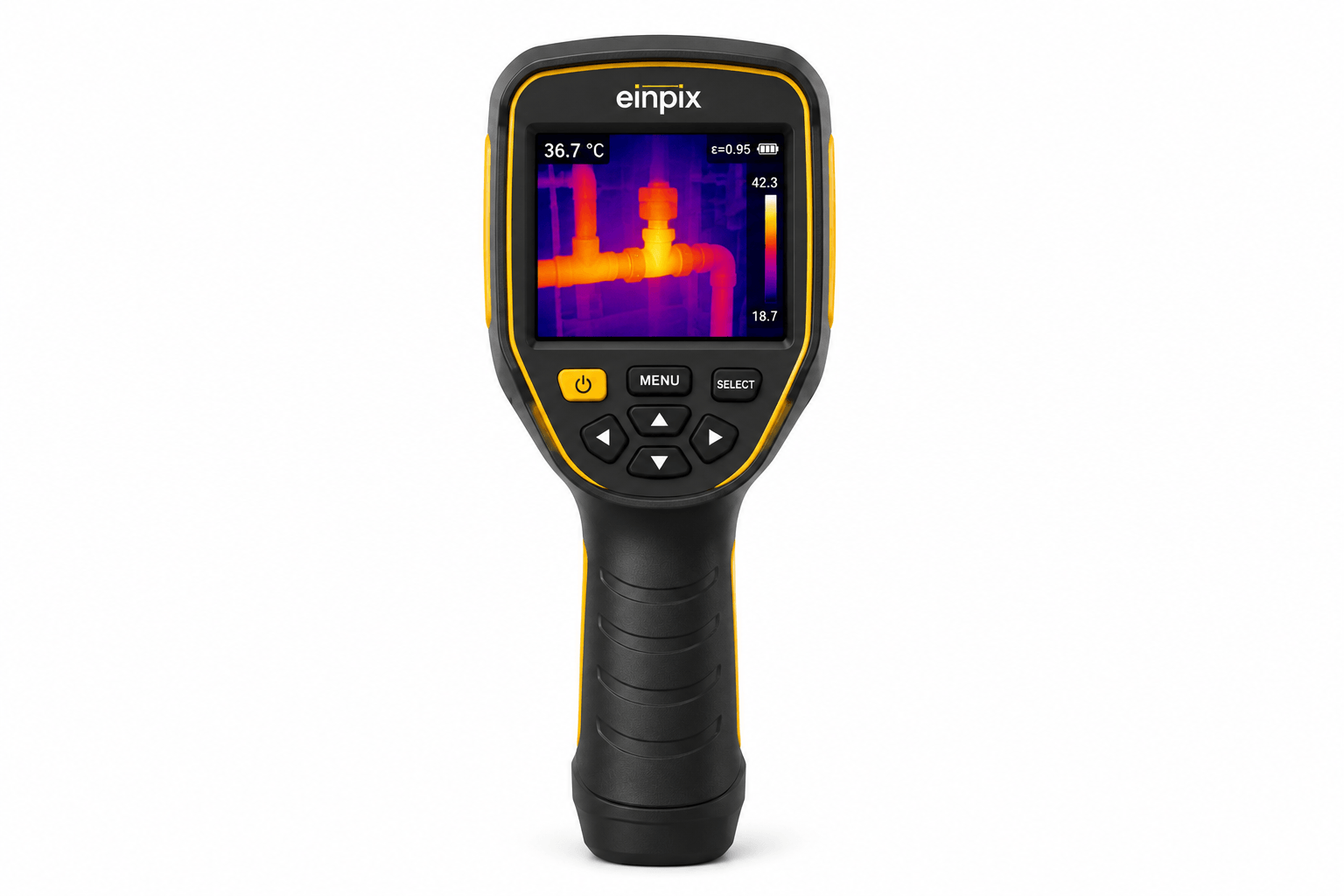
Thermal cameras reveal temperature differences across coils, ducts, and electrical parts, helping technicians identify hidden faults more quickly.
Expected price range: €200–€800
Expected lifespan: 5+ years
26. Inspection camera
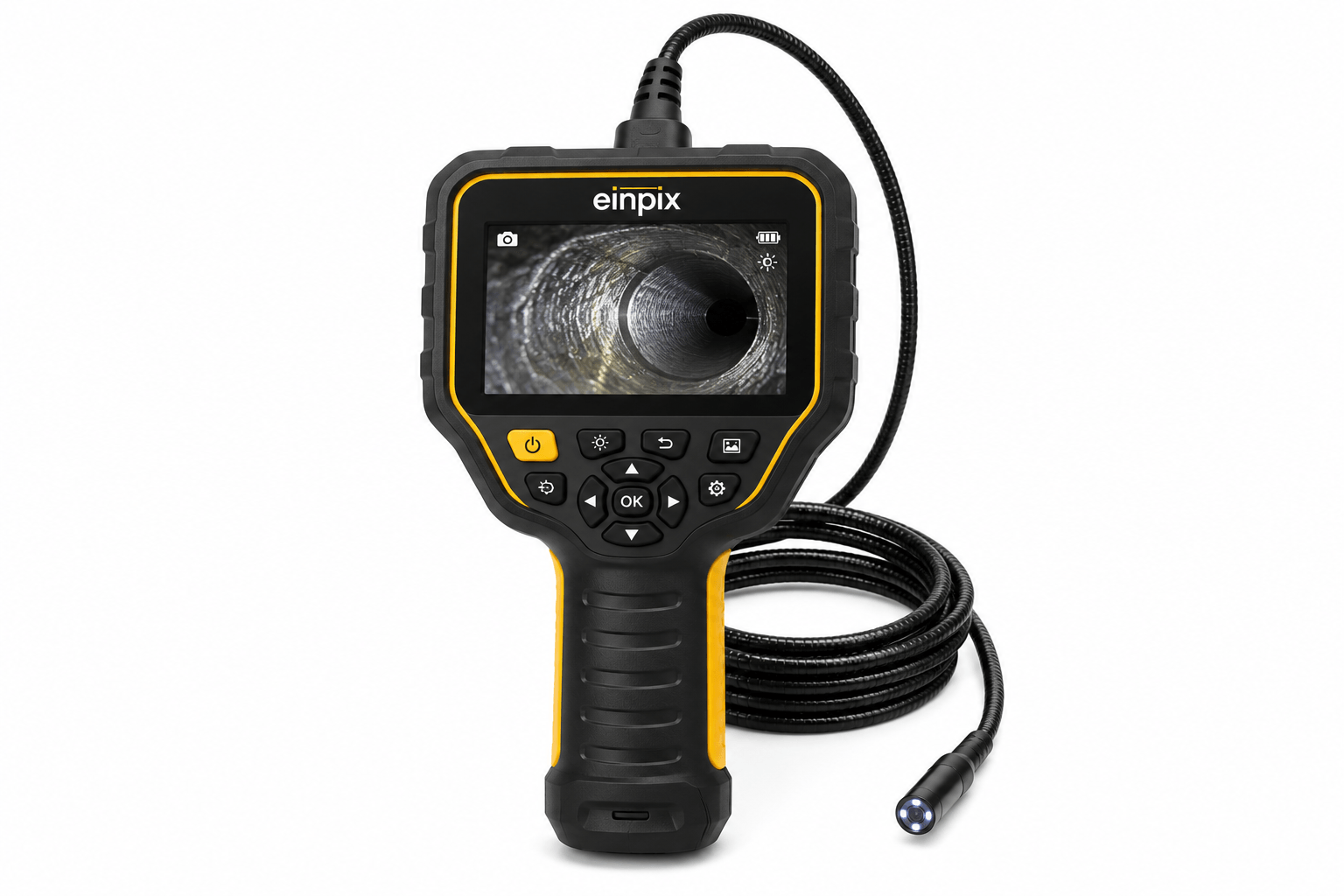
Inspection cameras help technicians view hidden internal spaces such as duct runs, behind units, or inside wall cavities.
Expected price range: €50–€250
Expected lifespan: 4–8 years
HVAC safety tools technicians should always keep nearby
Safety equipment often receives less attention than gauges or drills, but it protects technicians during live electrical work, cutting, brazing, and refrigerant handling.
27. Safety glasses

Safety glasses protect against metal fragments, dust, and refrigerant splashes.
Expected price range: €5–€20
Expected lifespan: Replace when scratched or damaged
28. Cut-resistant gloves

Gloves protect hands when handling sheet metal, pipework, and sharp equipment edges.
Expected price range: €10–€25
Expected lifespan: Replace every few months depending on wear
29. Lockout/tagout kit
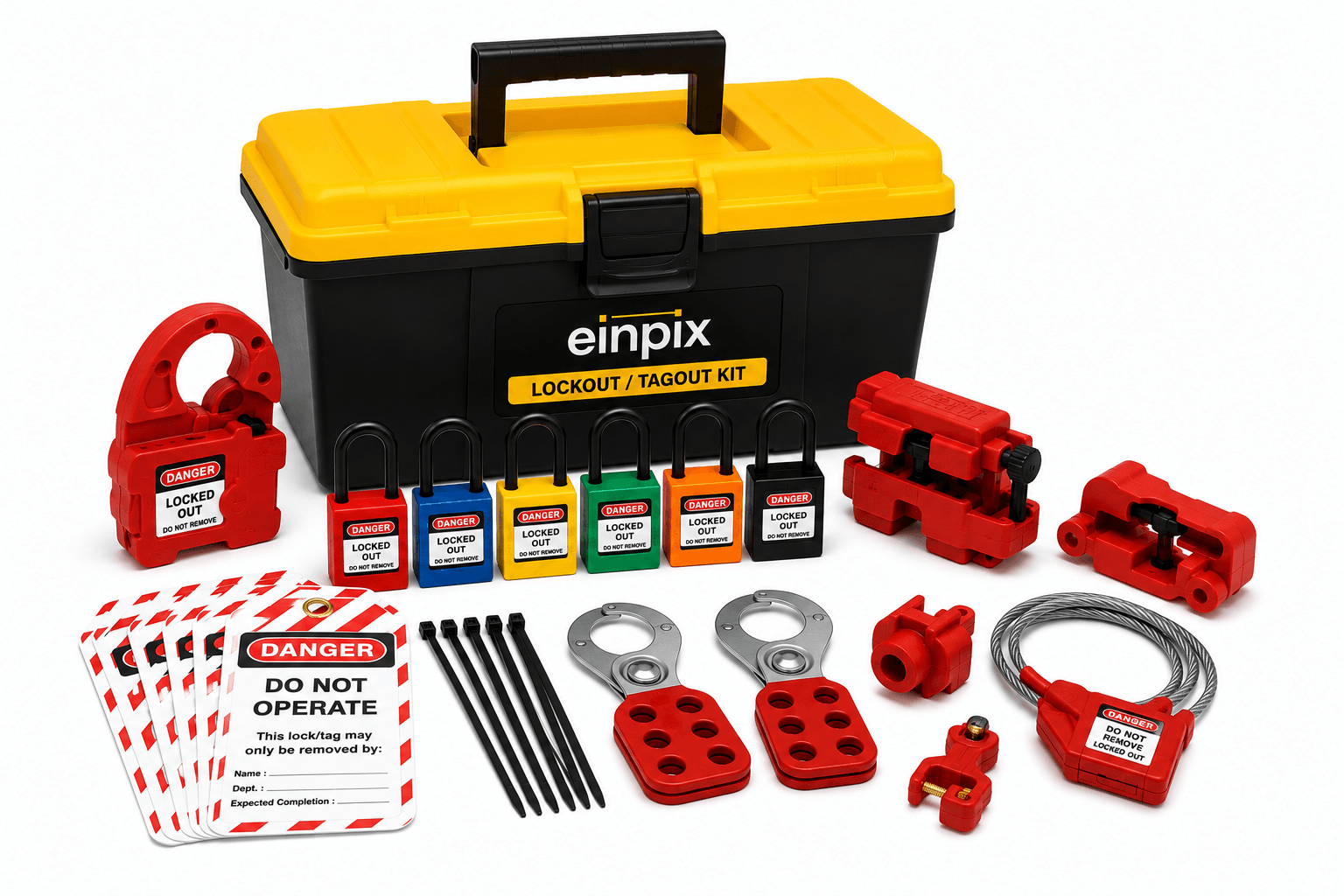
A lockout kit helps isolate power safely before electrical work begins.
Expected price range: €20–€50
Expected lifespan: Several years
30. Respirator
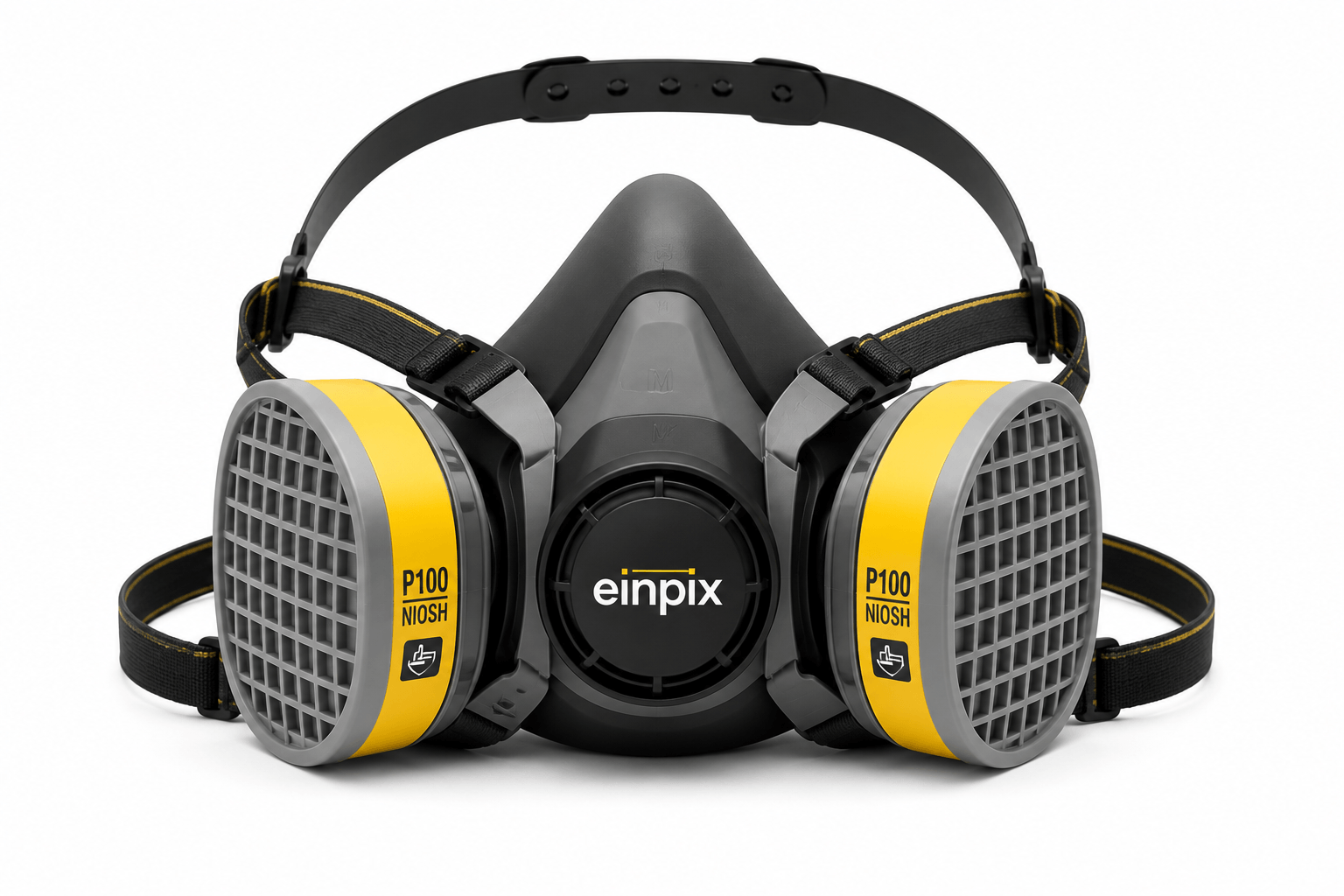
Respirators protect against dust, insulation fibres, and fumes during installation or demolition work.
Expected price range: €15–€40
Expected lifespan: Replace filters regularly
HVAC business management software and apps
As an HVAC business grows, digital systems become just as important as physical tools. Scheduling, invoicing, communication, and lead generation often determine how smoothly work moves between office staff and field technicians.
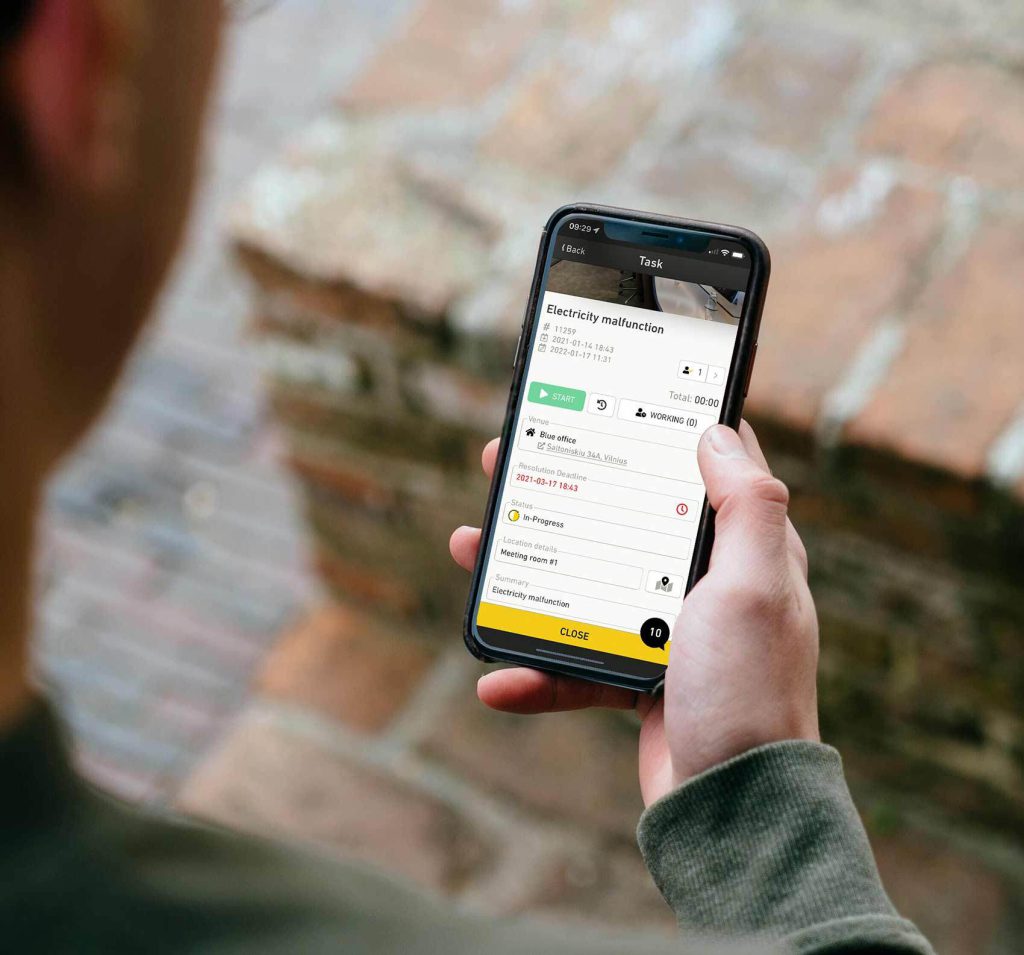
31. Einpix

Einpix is a field service management platform that helps HVAC businesses manage technician schedules, recurring maintenance visits, digital quotes, invoices, and customer records in one place. It is particularly useful when the same customers require annual servicing, seasonal maintenance, or repeat callouts, because job history and future appointments remain easy to track across the whole team.
Pricing: Einpix pricing starts at €12 per user per month for a team of 5+ users, making us a popular choice for small business (although we also have the advanced features to support larger organisations). Save 15% by switching to annual billing.
32. QuickBooks

QuickBooks helps HVAC businesses track invoices, expenses, labour costs, and payment records, especially once materials and recurring maintenance contracts become harder to manage manually.
Pricing: Around €10–€30 per month depending on plan
Alternative:
- Xero
33. WhatsApp

WhatsApp is often used by HVAC businesses for fast communication between office staff and technicians, especially when schedules change during the day or site photos need to be shared quickly. It also helps teams confirm arrival times, discuss unexpected parts requirements, or send quick updates without opening a full office platform.
Pricing: Free for standard business use
Alternative:
- Microsoft Teams, Einpix
🤓 Pro tip: WhatsApp has some serious limitations around tracking chat history in relation to tasks completed – which is why many businesses prefer Einpix instead. Because Einpix is a full field service management platform, all communication is structured around actual work (think facilities, projects, equipment, clients, and specific tasks). So you never have to worry about losing crucial messages in endless chat threads. See for yourself by trying Einpix free!
34. Google Ads

Many HVAC businesses use Google Ads to generate installation leads, emergency repair enquiries, and seasonal maintenance bookings. Paid search often becomes especially valuable during peak heating or cooling periods when customers need urgent help.
Pricing: Many small HVAC firms begin with €300–€1,000 monthly budgets
Alternative:
- Meta Ads Manager
Download the HVAC technician tools list PDF
A printable HVAC technician tools checklist works best as a quick reference rather than a full guide. The downloadable version of this article focuses on physical tools only, grouped by hand tools, installation tools, diagnostic tools, and safety tools. That way, technicians can compare what they already own against what they still need.
🔽 Downloadable HVAC Technician Tools Checklist (pdf)
FAQs
What tools does an HVAC technician need first?
Most beginners start with screwdrivers, pliers, wire strippers, a multimeter, and a manifold gauge set because these cover the widest range of early service tasks.
What is the most important HVAC diagnostic tool?
A digital multimeter is often the first diagnostic tool technicians rely on because electrical faults appear across almost every type of HVAC equipment.
What tools do HVAC installers use that service technicians may not carry?
Installers usually carry more pipe preparation tools, including tubing cutters, flaring tools, tubing benders, and brazing equipment.
Can I download this HVAC technician tools list as a PDF?
Yes – a printable version works best as a physical checklist grouped by tool type and purchase priority.
How much does a full HVAC tool kit cost?
A basic starter kit often costs €300–€600, while a professional setup including refrigerant recovery equipment and advanced diagnostics can easily exceed €2,000.